
Updated October 9, 2026. This guide discusses Florida law and common South Florida pool layouts. Your approved plans and local building department control the requirements for your property.
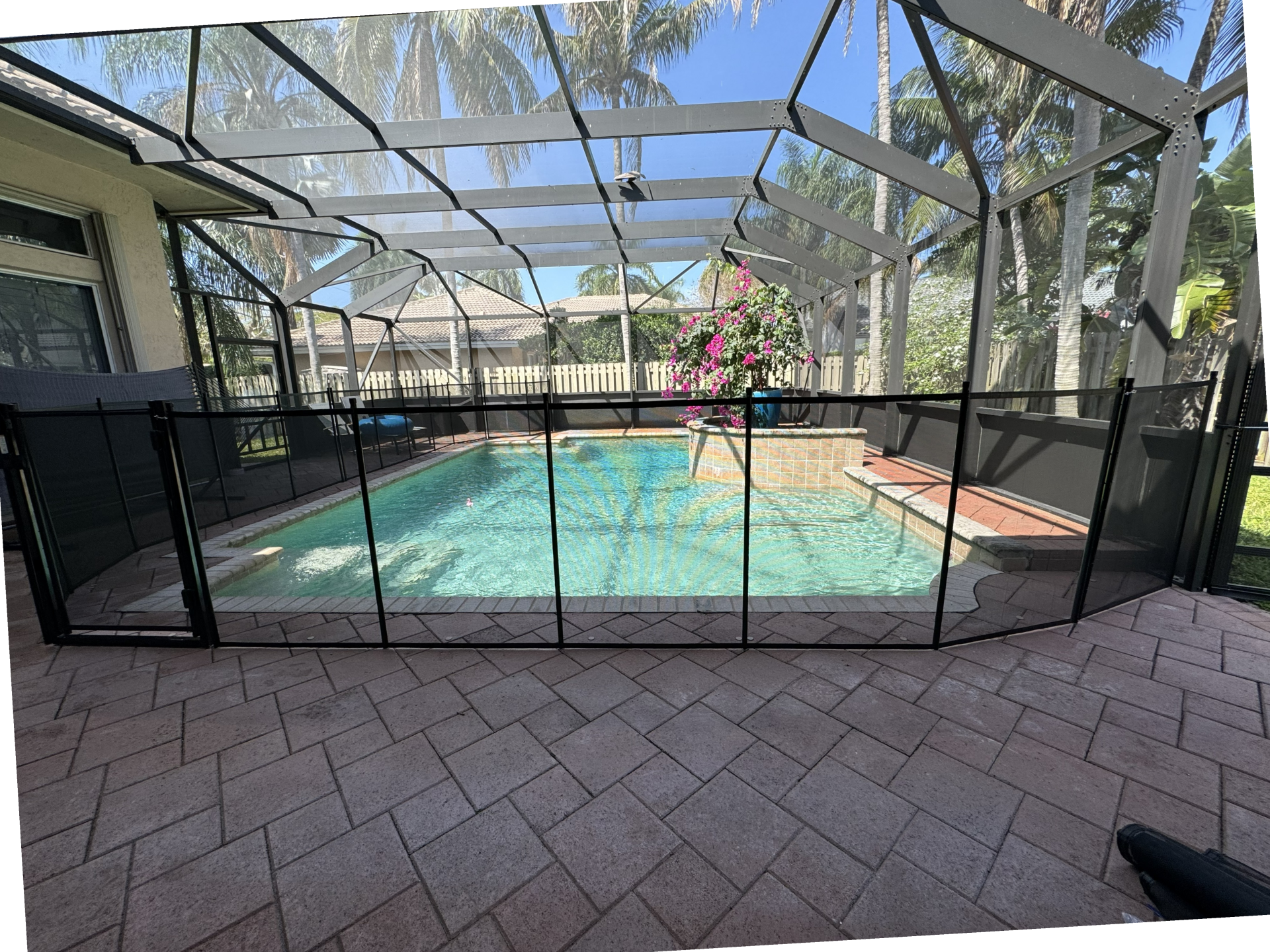
A pool fence with a screen enclosure is not always separately required in Florida. A separate interior fence may be unnecessary when the complete screen-enclosure barrier and home-access protections meet the requirements for the property. But a screen cage is not automatically a compliant child-safety barrier. The doors, latches, openings, layout and access from the house all matter.
We see the same backyard setup all over South Florida: a sliding glass door opens to a covered patio, the patio opens into a screen enclosure, and the pool is only a few steps away. The cage keeps out mosquitoes, leaves and the occasional iguana. The question homeowners eventually ask is more serious: Do I still need a pool fence?
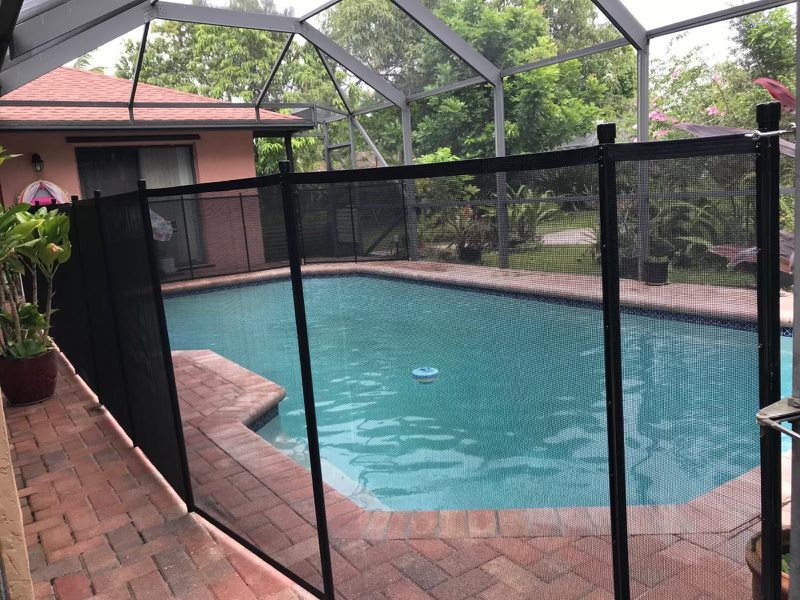
A pool fence with a screen enclosure is not redundant. The two barriers do different jobs. A screen enclosure protects the outer edge of the patio and pool area. A properly placed removable mesh fence can isolate the water itself from the house, outdoor kitchen, play area and patio furniture. Depending on the approved safety method for the property, the screen enclosure may satisfy a legal requirement, the interior fence may provide the stronger isolation layer, or both may be used together.
The honest answer is not a blanket yes or no. It depends on how the enclosure was built, whether every door closes and latches correctly, how the home connects to the pool area, and what your city or county approved. This guide explains the difference so you can evaluate your actual doors, patio and pool rather than relying on a photograph.
1. Do I Need a Pool Fence If I Have a Screen Enclosure in Florida?
Not always. Florida law does not say that every homeowner must use the exact same pool-safety product. For a new residential pool to pass final inspection and receive a certificate of completion, Florida Statute 515.27 lists several safety-feature options. One option is an enclosure that isolates the pool from the home and meets the barrier requirements in Section 515.29. Other options include an approved safety cover, qualifying exit alarms, specified self-closing and self-latching door devices, or an independently certified water-entry pool alarm.
Those are the state act’s safety-feature options. They do not waive a physical barrier required by the Florida Building Code or a local ordinance. Confirm both the enclosure requirement and the approved protection for doors and windows from the house. It does not mean that any screened patio automatically passes. If an enclosure is being used as the pool barrier, its design and operation must satisfy the applicable requirements. Florida Statute 515.29 addresses height, openings, climbability, placement and pool-access gates. Local codes, approved plans and inspection requirements may add details.
There is another distinction that matters: passing an inspection and building the safest practical layout are not always the same decision. A homeowner may have a legally accepted safety method and still choose a four-sided isolation fence because a child can walk directly from the home into the screened pool area.
If you want the detailed statewide requirements, read our separate guide to Florida pool fence laws and inspection requirements. That guide covers the measurements; here we focus on the access routes inside a screened patio.
2. 7 Essential Checks for a Screen Enclosure Pool Barrier
A screen enclosure may be used as part of a pool-barrier system when it meets the requirements that apply to that property and project. Miami-Dade County, for example, identifies screened-in patios as one form a swimming-pool barrier can take, while also directing homeowners to the state statutes, county code and permit requirements. You can review the county’s official swimming pool barrier guidance.
Use these seven checks to discuss your screen enclosure with the building department or installer. Florida pool barrier requirements apply to the complete installed system:
- Does the enclosure form a continuous barrier? Look for tears, loose panels, open sections, gaps under doors and damaged framing.
- Are pool-access doors self-closing? A door that stops several inches short or needs a push is not functioning as intended.
- Do the doors positively self-latch? Closing most of the way is not the same as latching.
- Do the doors open in the required direction? Pool-access gates used as part of a barrier generally must open outward, away from the pool.
- Can a young child reach or manipulate the release? Latch position, nearby openings and door construction all matter.
- Does the house open directly into the protected area? Sliding doors, French doors, cabana doors and accessible windows must be considered under the approved safety method.
- Are there climbable objects next to the barrier? Planters, storage boxes, patio chairs and equipment can defeat a barrier that looks fine when the area is empty.
This is a homeowner screening, not a permit inspection. A screen door can work perfectly on Monday and stop latching after a hinge loosens on Friday. Barriers are moving systems, not decorations. They need to work every time.
A yard fence, a screen cage and an isolation fence are not interchangeable
Homeowners often group every backyard boundary under the word “fence,” but the layout changes the level of protection:
- A property-line fence keeps people from entering the yard from outside.
- A screen enclosure surrounds a patio or pool environment and helps control insects, debris and outside access.
- A four-sided isolation fence separates the pool from the house and the rest of the usable yard.
That last difference is important. The Centers for Disease Control and Prevention reports that a four-sided isolation fence separating the pool from the house and yard reduces a child’s drowning risk by 83% compared with three-sided property-line fencing. That does not make supervision less important. It explains why families often install a pool fence inside a screened enclosure even when the outside cage is in good condition.
3. Six Reasons a Screen Enclosure May Not Be Enough
1. The house may open directly into the pool area
Picture a typical home in Weston, Pembroke Pines, Coral Springs or Pinecrest. The family room has a wide sliding door. On the other side is a covered patio, then the pool. If the screen cage is the only physical barrier, a child who gets through the sliding door may already be inside the pool environment.
An interior mesh fence changes that route. The child must get through the home’s door protection and a separate pool gate before reaching the water. That is the practical advantage of isolation.
2. Screen doors get propped open
Pool-service days, landscaping, grilling, parties and pets all create reasons for people to hold or prop a screen door open. Once that happens, the enclosure is no longer a closed barrier. The habit is especially easy to miss when several adults assume somebody else is watching the door.
A dedicated fence route can keep the pool isolated while people move through other parts of the patio. The gate still needs to be used correctly, but the safety boundary sits closer to the hazard and is harder to forget.
3. The door closes but does not latch
This is one of the most misleading failures. The door appears shut from across the patio, but the latch never engaged. Wind, corrosion, a sagging frame, worn hardware or simple misalignment can leave a gap that a child can pull open.
Test the door instead of looking at it. Open it to several different positions and let it go. It should close and positively latch without help. Then pull gently to confirm it actually caught.
4. Screen material is not the same thing as child-resistant mesh fencing
A patio screen is primarily designed to enclose an outdoor living area. A removable mesh pool fence is designed and installed as a tensioned barrier system with poles, sleeves, sections, latches and gate hardware. They may look similar from a distance, but they are not the same product and should not be judged by the same standard.
When comparing systems, look beyond color and price. Pole construction, mesh quality, border stitching, spacing, gate design, warranty and installation method all matter. Our pool fence shopping guide explains what to compare before accepting an estimate.
5. Furniture and outdoor features create shortcuts
South Florida patios are not empty test laboratories. They have lounge chairs, toy boxes, grills, planters, coolers and outdoor kitchens. A barrier can meet its intended height and still become easier to climb when furniture is pushed against it.
Look at the area from a child’s height. A bench that seems harmless to an adult may be the first step to a latch or opening. Keep the route around any barrier clear.
6. Repairs and renovations can change the approved setup
Replacing screen panels, changing doors, adding an outdoor kitchen, resurfacing the deck or remodeling the home can change how people move through the pool area. Do not assume a layout remains compliant because it passed years ago. Existing pools, renovations and local permitting can involve different questions, so verify the current setup with the authority having jurisdiction.
The U.S. Consumer Product Safety Commission’s home-pool barrier guidance is a useful safety reference, but your approved plans and local code still control the project.
4. Screen Enclosure vs. Removable Mesh Pool Fence
| Question | Screen enclosure | Removable mesh isolation fence |
|---|---|---|
| Primary job | Encloses the patio/pool area; helps control insects, debris and outside access | Creates a direct barrier around the water or pool deck |
| Separates the house from the pool | Often no, because the house opens into the enclosure | Yes, when the route is designed as four-sided isolation |
| Can be code compliant | Potentially, when the entire system meets the approved requirements | Potentially, when the product, layout and installation meet applicable requirements |
| Gate behavior | Depends on the screen door, closer, latch and maintenance | Self-closing, self-latching gate options are designed for the fence system |
| Removable | No; it is part of the structure | Fence sections can be removed and reinstalled by an adult |
| Best use | Outdoor enclosure and perimeter protection | Direct child-safety isolation between the home/patio and the water |
The strongest answer is often not “either/or.” It is a layered setup in which the home’s doors, screen enclosure, alarms and a dedicated pool fence each cover a different failure point. The Florida Department of Health recommends layers that include four-sided fencing with self-closing, self-latching gates, covers and alarms.
5. When a Pool Fence With a Screen Enclosure Makes the Most Sense
A pool fence with a screen enclosure is especially worth considering when:
- A baby or toddler lives in or regularly visits the home.
- Grandchildren visit even if no young children live there full time.
- Sliding glass doors open directly from the house into the screened pool area.
- One part of the enclosure is frequently opened for pets, gardening or pool service.
- The patio is used as a play area, dining area or outdoor living room.
- The pool is at an Airbnb or vacation rental where guests are unfamiliar with the property.
- The homeowner wants a visible, physical boundary instead of relying on an alarm alone.
- The family wants a removable system for maintenance, with a plan to secure the pool whenever a section is taken down.
A fence is not a substitute for active supervision, swimming lessons, CPR readiness or properly maintained alarms. It is a way to buy time when a door is opened, an adult is distracted or a routine changes.
6. Can You Install a Pool Fence Inside a Screen Enclosure?
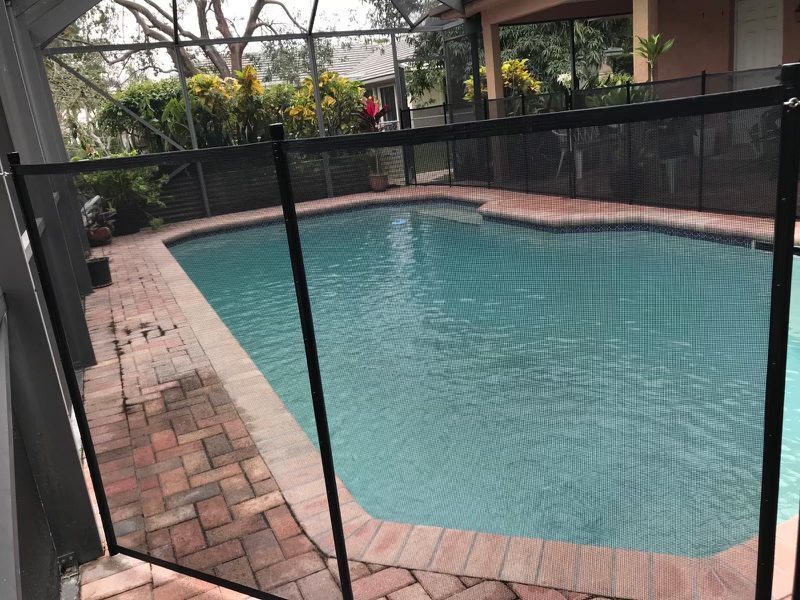
Yes. In many South Florida homes, the cleanest route is inside the screen cage, between the home’s living area and the pool. The screen enclosure fence route depends on the pool shape, walking paths, steps, columns, deck material, outdoor kitchen, spa and the places where people need access.
Concrete decks
Standard concrete is generally straightforward for an experienced installer. The route should be measured carefully so the panels remain properly tensioned and the gate has enough room to operate without colliding with furniture or screen doors.
Pavers and travertine
Paver decks are common in Boca Raton, Wellington, Parkland, Weston and newer South Florida remodels. The installer must account for individual pavers, the base underneath them and the possibility of movement. Travertine, porcelain and other brittle finishes require the correct tools and technique to reduce the chance of damage.
If you want to understand why deck material changes the job, see our breakdown of how long pool fence installation takes.
Steps, raised spas and unusual pool shapes
A good route follows how the property is actually used. It should not create a tripping hazard, block a necessary exit or leave an easy path around the end of the fence. Curves, narrow walkways and steps may require shorter custom sections or a different gate location.
Homeowners also ask how much deck space should remain between the fence and the water. There is no substitute for a site-specific layout and the approved requirements, but our article on how close a safety fence should be installed to a pool explains the practical issues involving access, curves and pool maintenance.
Self-closing pool gates or manual openings?
Start with the approved barrier design. Gates providing pool access are subject to self-closing and self-latching requirements; a manually disconnected mesh section should not be assumed to satisfy a required gate. Ask the building department which access arrangement it will approve before comparing prices.
A properly adjusted self-closing, self-latching gate also reduces reliance on someone remembering to reconnect the fence after every trip. For daily access to the pool, gate location and dependable operation deserve particular attention.
Before choosing, read the advantages and drawbacks in our guide to manual pool-fence openings versus self-closing gates.
7. How Much Does a Pool Fence Inside a Screen Enclosure Cost?
There is no honest one-price answer without seeing the pool. The price of a pool fence with a screen enclosure depends on the fence route and the surface underneath it. Two screen enclosure layouts of the same overall size can require very different work. One may need a straight run with a single gate. Another may have a raised spa, three steps, a narrow side passage, fragile deck material and two daily-use entrances.
| Cost factor | Why it changes the price |
|---|---|
| Linear footage | More fence requires more panels, poles, sleeves and installation time. |
| Number and type of gates | A self-closing gate requires additional hardware, alignment and labor. |
| Deck material | Concrete, pavers, travertine, porcelain, marble, wood and grass require different methods. |
| Steps and elevation changes | Short custom sections and additional drilling may be required. |
| Pool and patio layout | Columns, spas, planters, kitchens and tight walkways affect the route. |
| Fence model and height | Product grade, material, height and warranty affect the installed price. |
The most useful estimate is written, measured on site and clear about the gate, footage, fence model, deck conditions, warranty and any permit-related responsibility. Price matters, but it should not be compared without comparing what is included.
8. South Florida Rules and Pool Layouts Are Local
Florida sets the statewide baseline, but permit administration and local requirements are not identical everywhere. The city or county with jurisdiction over the property makes the final call. As of this October 2026 update, the Florida Building Commission identifies the 8th Edition (2023) code as the current edition. The calendar year in this article’s title does not mean a new code has already taken effect. A contractor’s statement, an online article or a neighbor’s old permit does not override the approved plans for your address.
Miami-Dade County
Homes in Pinecrest, Palmetto Bay, Coral Gables, Kendall, Aventura, Miami Beach and unincorporated Miami-Dade include everything from compact patios to large waterfront pool decks. Miami-Dade’s official guidance recognizes screened-in patios as a possible barrier form and also publishes separate information about swimming-pool permits. Confirm whether the property is handled by the county or a municipality before assuming which office controls the permit.
Broward County
Pembroke Pines, Weston, Davie, Plantation, Coral Springs, Parkland, Hollywood, Pompano Beach and Fort Lauderdale have a wide mix of screened and unscreened pools. Many municipalities run their own permitting departments, while the county handles the Broward Municipal Services District. The Broward County Building Code Division is a useful starting point when identifying the right office.
For more local context, see our guides for pool fences in Pembroke Pines, pool fences in Plantation and pool fences in Coral Springs.
For example, Plantation’s pool-barrier ordinance covers existing pools and requires barriers to be kept free of defects. A home’s age alone therefore does not establish a local exemption. Ask about the existing screen enclosure and its maintenance history when reviewing an older property.
Palm Beach County
Boca Raton, Delray Beach, Boynton Beach, Wellington, West Palm Beach and Palm Beach Gardens include different municipal and unincorporated jurisdictions. Palm Beach County publishes a Residential Swimming Pool Safety Requirements form through its Building Division. Use the office responsible for the exact property address.
Monroe County and the Florida Keys
Key Largo, Marathon, Big Pine Key and the surrounding Keys add tight lots, salt exposure, wind and floodplain considerations to the layout. Monroe County’s Building and Permitting Department coordinates multiple reviews, and some incorporated areas may have their own processes. A pool-fence route should work with the property’s exits, equipment and storm plan.
Southwest Florida
Screened lanais are especially common around Naples, Estero, Bonita Springs, Fort Myers and Cape Coral. The same central question applies: does the cage merely enclose the outdoor living area, or does the approved system truly isolate access to the water? When sliding doors open directly into the lanai, an interior removable fence can create the missing separation.
9. Maintenance Matters After Installation
A screen enclosure and an interior fence need separate maintenance checks. A pool barrier is only reliable when it is standing, connected and working. Put a recurring inspection on the calendar instead of waiting for something to look obviously broken.
- Release each gate from several open positions and confirm it closes and latches.
- Inspect mesh, borders, poles, sleeves and section latches.
- Check for gaps caused by moving pavers or loose hardware.
- Move furniture, toys, planters and storage boxes away from the barrier.
- Confirm every adult who removes a section knows how to reinstall and secure it.
- After service work or a party, walk the entire route before allowing children onto the patio.
South Florida storms deserve their own plan. Follow the fence manufacturer’s instructions when strong winds are forecast. If sections must be removed, keep children completely away from the pool until the barrier is properly reinstalled and checked. Our South Florida pool-safety checklist includes additional storm and maintenance reminders.
10. Screen-Enclosure and Pool-Fence Checklist
Walk the property and answer these questions honestly:
- Can a child leave the house and reach the water without passing through a self-closing, self-latching pool gate?
- Do all screen doors close and positively latch from every open position?
- Are there torn screens, loose panels, damaged frames or openings under the enclosure?
- Can a chair, planter, grill or storage box be used to reach a latch or climb the barrier?
- Does a pet door create uncontrolled access to the pool area?
- Are the pool-service and landscaping entrances secured after every visit?
- Does the fence route leave safe walking and emergency access?
- Is the gate placed where people will actually use it instead of walking around it?
- Do you know which pool-safety feature was approved for the property?
- Have renovations changed any part of the original barrier or access route?
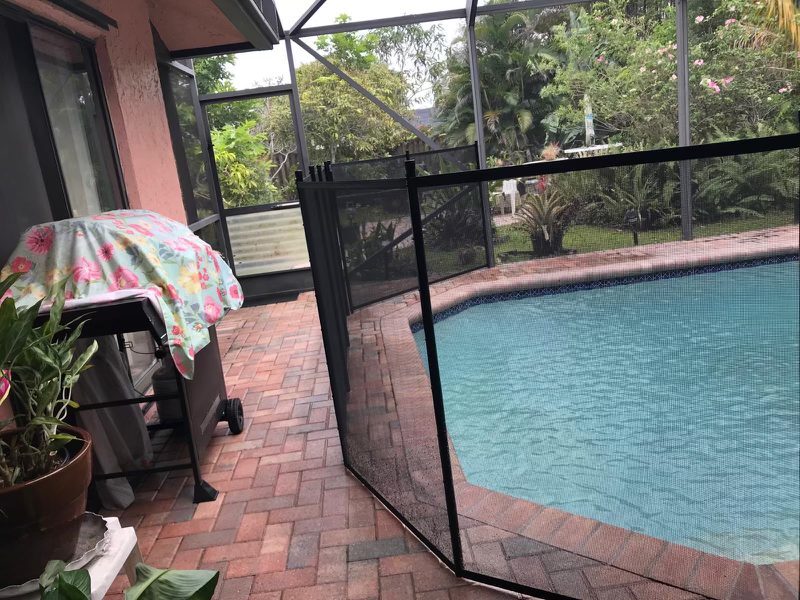
If any answer makes you hesitate, get the layout evaluated. A small hardware adjustment may solve the problem. In other homes, the better answer is a dedicated removable mesh fence inside the cage.
11. Bottom Line: A Screen Cage Is Not an Automatic “No Fence Needed” Card
A screen enclosure may be part of a compliant pool-barrier system, but the label “screen enclosure” does not prove that the doors, latches, openings, layout and home access satisfy the requirements for your property. It also does not guarantee that the pool is isolated from a young child inside the house.
For many South Florida homes, a pool fence with a screen enclosure gives the family a clearer safety boundary: the cage protects the larger outdoor area, while the removable fence separates everyday patio life from the water.
Florida Pool Fences installs removable mesh pool fences, self-closing gates, pool safety covers and pool safety nets across Miami-Dade, Broward, Palm Beach, Monroe and Southwest Florida. For a site-specific layout and written estimate, request a free pool-safety estimate or call:
- Miami: 305-833-2074
- Broward / Palm Beach: 954-605-5454
- Southwest Florida: 239-544-8989
Safety and legal note: This article provides general information, not legal advice or a permit approval. Requirements can vary by jurisdiction, approved plans, pool age and project scope. Confirm the requirements for your address with the responsible building department.
12. Common Questions About Pool Fences and Screen Enclosures
Does a pool screen enclosure count as a fence in Florida?
It can. A screen enclosure may serve as part of an approved pool-barrier system when it meets the applicable height, opening, gate, latch, placement and access requirements. It does not qualify merely because it surrounds the patio. The local building department and approved plans control.
Do I need a pool fence if my screen cage has self-closing doors?
Self-closing doors alone do not establish compliance. The complete enclosure, latches, openings, house access and approved safety features must satisfy the applicable building code and local rules. Many families still add an isolation fence because the house opens directly into the screened pool area.
Can I install a removable mesh pool fence inside a screen enclosure?
Yes. Removable mesh fencing is commonly installed inside screened patios on concrete, pavers, travertine and other deck surfaces. The route, sleeves, gate and installation method should be selected for the specific deck and layout.
Does my backyard property fence count as the pool barrier?
Do not assume it does. Florida’s barrier rules address placement and generally require the barrier to surround the pool and obstruct access, especially from the home and yard. A property-line fence may not isolate the water from the house. Confirm the approved barrier plan for the property.
How tall does a residential pool barrier need to be in Florida?
Florida Statute 515.29 states that a residential swimming-pool barrier must be at least four feet high on the outside. The Florida Building Code and local requirements contain additional details involving openings, gates, latches and specific barrier types.
Does a screen-enclosure door have to self-close and self-latch?
If the door or gate is being used as pool-barrier access, it must operate according to the applicable pool-access requirements. A door that looks closed but does not positively latch should be repaired immediately.
Do I need a permit to add a pool fence inside my screen enclosure?
Permit requirements vary by city, county, barrier type and project. Miami-Dade specifically identifies pool-safety barrier fences as permit-related work. Ask the building department responsible for your exact address before installation.
Will a pool fence damage my pavers or travertine?
A qualified installer uses equipment and methods appropriate for the surface. Pavers, travertine, porcelain and marble require more care than standard concrete. No contractor should promise that brittle or previously damaged material has zero risk, but proper tools and experience reduce that risk.
Should I choose a manual opening or a self-closing gate?
For an entrance used regularly, a self-closing, self-latching gate usually reduces the chance that somebody forgets to reconnect the fence. Do not substitute a manually opened section for a required compliant gate; confirm the approved access arrangement before installation.
Should a removable pool fence stay up during a hurricane?
Follow the manufacturer’s storm instructions. Some removable systems may need to be taken down before high winds. If the fence is removed, children must be kept completely away from the pool, and the fence should be promptly reinstalled and inspected after the storm.
Does homeowners insurance require a separate pool fence?
Insurance requirements can be stricter or different from the minimum legal requirements. Ask the carrier in writing what barrier, documentation or inspection it requires. Do not rely on a general online answer for a specific policy.