

Choosing a pool fence Coral Springs families can depend on starts with a careful look at the backyard. Where can a child reach the water? Which doors open toward the pool? Can adults use the gate easily while keeping it closed and latched? These questions matter as much as the fence material.
A useful plan considers the complete barrier, the deck beneath it, local permit requirements, and everyday supervision. A screen enclosure or property fence may be part of a compliant barrier when the entire arrangement meets the applicable requirements. A separate isolation fence can add separation between the home and the water.
This guide explains nine practical steps for planning, comparing, and caring for a Coral Springs pool fence. Use it to prepare for an on-site assessment and to ask specific questions before approving a layout. Final requirements depend on your property and project; confirm them with the City of Coral Springs Building Department.
1. Map Every Route to the Water
Before measuring fence length, walk through the property from a child’s possible starting points. Begin inside the house, then check the yard and any side entrance. Your goal is to identify every route that could lead into the pool area without an adult deliberately opening a controlled access point.
For a pool fence Coral Springs homeowners can use comfortably, the layout needs to reflect how the household actually moves. Note where people carry towels, where children play, and how someone reaches the grill or outdoor seating. A shortcut that cuts through the pool zone deserves attention during planning.
- Mark sliding doors, hinged doors, and accessible windows facing the pool.
- Include side gates, garage exits, and doors from a cabana or outdoor bathroom.
- Locate stairs, raised patios, retaining edges, and changes in deck elevation.
- Show benches, planters, storage boxes, and equipment beside the proposed fence.
- Identify access needed for pool maintenance, landscaping, and future repairs.
Make a simple sketch and take photographs from several angles. Include a wide view showing the home and pool together, plus close-ups of tight corners and proposed gate locations. Share these with the installer, while recognizing that photographs cannot replace measurements and a site inspection.
Test the proposed routes without putting children near the water. An adult can walk the path from the kitchen to the patio or from a side entrance to the equipment pad. Discuss any route that would encourage someone to prop open the gate. Changing the layout now is easier than correcting an inconvenient entry after drilling.
2. Pool Fence Coral Springs: Check Permits and Safety Requirements
Discuss the permit process before ordering materials. The city’s Fence and Gate Permit Application Checklist requests a survey showing the proposed work and property-line setbacks. For a pool fence, it calls for plans demonstrating compliance with R4501.17.1 residential swimming pool barrier requirements. Product approvals are requested for fencing other than chain link or wood.
The checklist is not exhaustive. Contact the Coral Springs Building Department at 954-344-1025 to confirm what your particular installation or replacement requires. Ask who will submit the application, which documents are needed, and what inspections apply. If an association reviews exterior changes, clarify that process separately.
Florida Statutes Chapter 515 identifies five residential pool safety-feature options: an isolation enclosure, an approved safety cover, qualifying exit alarms, qualifying self-closing and self-latching access doors, or a qualifying pool alarm. Those options do not waive separate building-code or local physical-barrier requirements.
The chapter’s barrier provisions specify at least four feet of height on the outside. Pool-access gates must swing away from the pool and have self-closing, self-latching locking hardware, with the release protected from young children. Have the proposed system’s detailed dimensions and hardware checked against all applicable requirements.
The city’s water-safety guidance recommends a five-foot, four-sided barrier. Treat that as safety guidance, distinct from the state statute’s four-foot minimum. Discuss the appropriate height during design rather than assuming any single measurement establishes compliance.
Before choosing a pool fence Coral Springs installers recommend, establish a clear approval path for your project. Keep copies of the layout, product documents, permit information, and inspection results together for future maintenance or alterations.
3. Choose a Complete Barrier Layout
A fence works as a system. Its ends, gates, adjoining structures, and ground-level clearances all deserve the same attention as the long straight sections. A layout drawing should make it clear how the pool area is enclosed and where each transition occurs.
A yard fence or screen enclosure may qualify as part of the complete barrier if its construction and access arrangements satisfy the applicable rules. Do not assume that a screened patio is automatically sufficient, or that it automatically fails. Have the entire arrangement reviewed, including doors between the home and pool area.
When evaluating a pool fence Coral Springs family members will pass every day, consider an isolation layout that separates the water from the home and main activity area. This can keep the route to outdoor seating or a play space outside the pool enclosure. The best location depends on the available deck and the approved design.
Ask the installer to mark the proposed fence line temporarily so you can assess it before work begins. Look at the design from inside the house as well as outdoors. Confirm that gates can move freely and that the fence does not create an awkward pinch point beside steps or furniture.
Review these layout details together:
- How the fence meets a wall, enclosure post, or another barrier section.
- Whether elevation changes create openings beneath the fence.
- Where furniture and movable objects will sit after installation.
- How adults can reach cleaning equipment without leaving access unsecured.
- Whether future deck work or landscaping would affect the approved arrangement.
Use the pool fence installation gallery to discuss visual preferences and possible layouts. Photographs can help communicate ideas, but another home’s design is not a substitute for checking your own property’s measurements and access points.
4. Pool Fence Coral Springs: Assess the Deck Before Installation
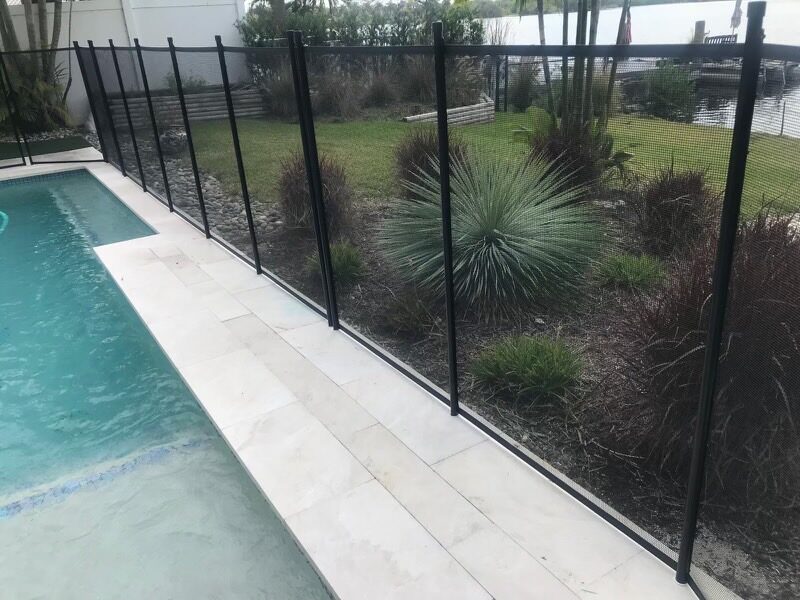
Concrete, pavers, and other deck finishes require different installation planning. The visible surface does not tell the whole story. Ask the installer to identify what supports the fence posts and gate, how the chosen system is anchored, and whether deck repairs are needed first.
Before choosing the pool fence Coral Springs contractors will install on your pavers, ask how they will evaluate the base beneath the finished surface. A loose or rocking paver should be discussed before a hole is drilled. Avoid treating an attractive deck finish as proof that the underlying support is suitable for every fence system.
On concrete, review cracks, joints, edges, and any patched areas along the proposed line. Point out known plumbing, electrical work, or previous deck modifications. If the location of concealed services is uncertain, ask what verification is needed before drilling begins.
Drainage and changes in elevation also belong in this conversation. Walk the route after rain when practical and note areas that collect water. Show the installer any steps, raised sections, or transitions between materials so the final layout can address them deliberately.
Before approving the installation, Coral Springs homeowners should ask for the following in writing:
- The fence system and anchoring method proposed for the actual deck.
- Any necessary preparation or repairs, with responsibility clearly assigned.
- The gate location and any support components it requires.
- How unused holes or sleeves will be handled if the design changes.
- What installation, cleanup, and follow-up service the estimate includes.
Review the Florida pool fence installation process before your appointment, then use the site visit to resolve property-specific questions. Professional installation still needs a suitable product, sound supporting surfaces, correct execution, and any required inspections.
5. Make the Gate Easy to Use and Hard to Leave Unsecured
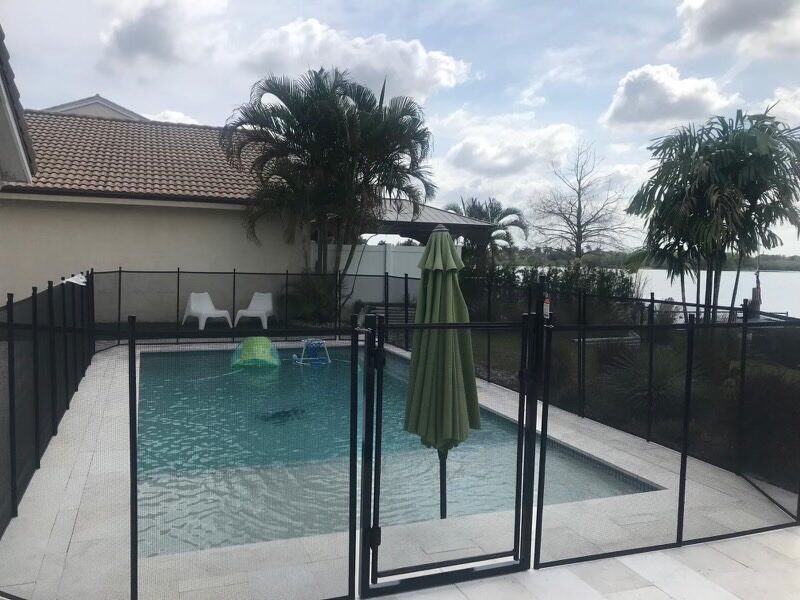
The gate is a daily-use component, so give it a full part of the planning conversation. Its position should support ordinary movement without encouraging shortcuts. Consider how an adult will approach while carrying towels or helping someone who needs assistance.
A pool fence Coral Springs households use reliably should have a gate that operates consistently within the manufacturer’s instructions. Ask for an explanation of the closer, latch, locking feature, and any adjustment requirements. Familiarity with the hardware makes it easier to recognize a change in performance.
At the installation walkthrough, ask the installer to demonstrate gate operation from the opening positions specified for the system. Watch it close and engage the latch without being pushed into place. Discuss any rubbing, dragging, or inconsistent engagement before considering the work finished.
Check the surrounding area as carefully as the hardware. A hose, fallen branch, shifted chair, or stored item can interfere with movement. Keep the gate’s operating area clear and make sure the planned furniture arrangement works after the fence is installed.
Give visiting adults a short demonstration. Explain how to verify that the latch has engaged and who to tell if anything feels different. Do not assume guests, grandparents, babysitters, or maintenance workers understand the system simply because they have used a pool gate elsewhere.
Never wedge or tie the gate open for convenience. If carrying equipment through it is difficult, discuss a safe access plan with the installer instead of improvising a permanent workaround. If the gate stops closing or latching properly, keep children away from the affected area and arrange repair promptly.
6. Compare Removable Fence Systems by Their Installed Performance
Removable mesh fencing can suit a range of pool layouts, but the word “removable” should not drive the safety plan. Evaluate the fence as it will stand in regular use: its supported posts, mesh, connections, gates, and ends must work together.
When comparing a removable pool fence Coral Springs suppliers propose, request the exact manufacturer and model. Ask for installation instructions, care requirements, and documentation supporting any product-specific performance or compliance claims. A broad label such as “meets standards” needs a clear explanation of which product, standard, and configuration it covers.
Examine a sample if one is available. Look at how the mesh attaches to the posts and how adjacent sections connect. Ask how damaged mesh or hardware is replaced, whether individual components are available, and who provides service after installation.
Appearance matters too. Review mesh visibility, border colors, post finishes, and gate placement from the house and patio. The pool fence product overview can help you identify options to discuss, while the final selection should reflect the approved layout and deck conditions.
When comparing a pool fence Coral Springs contractors have quoted, evaluate the complete installed system rather than the mesh price alone. Gate hardware, supporting components, preparation, permit work, and warranty terms can change what an apparently similar quote actually includes.
Keep the barrier installed and secured when the pool is not in use. Do not make routine removal part of entertaining plans. If maintenance genuinely requires removing a section, plan how access to the water will remain controlled, follow the manufacturer’s instructions, and restore and check the barrier before normal use resumes.
7. Add Supervision, Swimming Skills, and a Response Plan
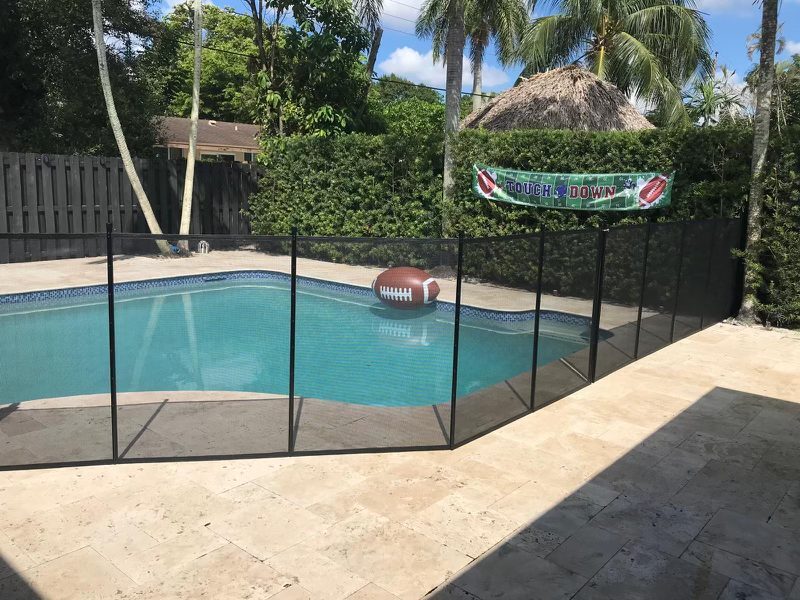
A pool fence Coral Springs families install is one part of a broader safety routine. The CDC’s drowning-prevention guidance supports four-sided fencing, close and constant adult supervision, swimming skills, and CPR training. Children still need supervision after taking swimming lessons.
During pool time, designate a responsible adult to watch the children without phone use or other distracting activities. When responsibility changes, have the next adult clearly acknowledge the handoff. Avoid relying on an assumption that someone else in the group is watching.
At the end of swimming, remove toys that could attract children back to the water, secure access doors, and check the gate. Build these tasks into the household’s usual cleanup rather than leaving them for later.
Coral Springs offers aquatic classes and swim programs, including year-round American Red Cross swimming lessons for different ages. Check current availability and ask which class matches the swimmer’s ability. Keep supervision expectations unchanged as skills improve.
Write a short household response plan and discuss it with caregivers. Make sure they know the property’s address, how to summon emergency help, and where emergency information is kept. Arrange appropriate CPR training rather than relying on written reminders alone.
Review the plan when guests stay overnight, a new caregiver starts, or the household routine changes. A brief explanation of the doors, alarms, fence, and gate helps visitors understand how the safety features fit together. Keep the instructions simple enough that adults can follow them consistently.
8. Inspect the Fence and Respond to Changes
Installation is the beginning of ownership. A pool fence Coral Springs homeowners maintain should be checked for changes in alignment, attachment, and gate operation. Use the manufacturer’s inspection and cleaning instructions as the baseline, and keep the installer’s contact information accessible.
Make a quick visual and gate check part of opening and closing the pool area. Schedule more detailed inspections at the intervals recommended for the system. Also inspect after storms, landscaping, deck repairs, or any event that may have disturbed the fence.
- Look for torn mesh, damaged borders, or loose attachment points.
- Check for leaning posts, loose connections, or movement at sleeves.
- Confirm that the gate closes and latches without obstruction.
- Notice new openings caused by deck movement or changed landscaping.
- Move furniture and stored objects away from the barrier.
- Look for wear or corrosion and ask about approved replacement parts.
Do not force a misaligned gate or modify a latch to make it easier to operate. Photograph the issue and contact the installer or manufacturer for the correct repair. Describe when the problem started and whether any nearby work occurred beforehand.
Use cleaning products and methods approved for the specific materials. Ask before applying lubricants, using aggressive cleaners, or pressure-washing mesh and hardware. A generic maintenance tip may not suit your system.
Keep a simple service record with installation documents, repair dates, and replacement-part details. If you later resurface the deck or alter a screen enclosure, review the fence layout before construction begins. Changes around the pool can affect a previously workable arrangement even when the fence itself remains unchanged.
9. Pool Fence Coral Springs: Review Estimates and Common Questions
Ask each installer to quote the same basic scope so you can make a meaningful comparison. Show them your access sketch, describe the deck, and identify the intended gate location. If proposals use different layouts, ask why and compare the practical consequences.
A written estimate should identify the product, height, approximate fence length, gate quantity, deck preparation, permit responsibilities, and included cleanup. Clarify exclusions, warranty coverage, service arrangements, payment terms, and how changes discovered during installation will be approved.
Use this guide to comparing pool fence estimates to organize the discussion. The most useful quote makes its assumptions visible so you can resolve them before scheduling work.
Does a screen enclosure replace a separate pool fence?
Sometimes an enclosure can be part of a compliant complete barrier, depending on its construction and access protections. Have the specific arrangement reviewed. A separate isolation fence can add a controlled boundary between the home and the water, even where another enclosure surrounds the area.
Can a fence be installed on a paver deck?
It may be possible, but the surface and underlying support need assessment. Ask which anchoring method the proposed system requires and whether loose or damaged areas need repair. Have those details included in the estimate.
Do I need a permit to replace an existing pool fence?
Confirm the scope with the Coral Springs Building Department before work begins. Explain whether you are replacing materials in the same location, changing the height or gate, or moving the fence line. An existing installation does not establish what the new project requires.
What affects installation cost?
The cost of a pool fence Coral Springs homeowners choose depends on measured length, gate hardware, deck conditions, product selection, and the project scope. Request an itemized on-site estimate. Comparing only a price per foot can overlook preparation, permit work, or components included in another proposal.
What should I do if the gate no longer latches?
Treat the barrier as needing immediate attention. Keep children away from the affected area and arrange repair. Do not rely on a gate that almost closes or on an improvised attachment that has not been approved for the system.
Ready to choose a pool fence Coral Springs installers can tailor to your property? Contact Florida Pool Fences to request an assessment. Bring your layout questions and ask for a written proposal covering the fence, gate, deck, approvals, and ongoing care.