
Rental pool safety requires attention to a space that changes hands more often than an owner-occupied backyard. Guests arrive, cleaners reset the patio, a pool technician visits, and the next family checks in. Each handoff creates a practical question: who has confirmed the pool area is ready now?
For Coral Springs hosts, rental pool safety works best as an operating routine with named responsibilities, observable checks, and a clear response when something fails. A clean pool photograph cannot show whether a gate closes properly. A completed service visit cannot tell you whether a later furniture delivery left an access route open.
These ten rental pool safety steps help owners and property managers organize that routine. The local and state requirements are identified separately from recommended operating practices. This guide does not certify a property, replace an inspection, or determine legal liability. Confirm the requirements for your particular rental and pool with the appropriate authorities.
1. Start With the Coral Springs Vacation-Rental Requirements
The city’s vacation-rental registration guidance says rentals must comply with applicable city standards, register annually by September 30, and have an owner or authorized agent available around the clock with authority to coordinate solutions to property problems. Check the current application process before advertising a new rental or renewing an existing one.
The city’s vacation-rental inspection checklist specifically addresses pools, spas, and hot tubs. It calls for compliance with current Chapter 515 standards and water disinfection under applicable state and county health requirements. It also states that advertising or renting must wait until the certificate of compliance is issued.
Keep the current certificate, approved property information, relevant inspection records, equipment manuals, and service contacts together. Ask the city about anything unclear, including whether a proposed change needs review. Treat a turnover record as an additional management tool: it does not replace the city’s inspection or registration process.
2. Identify Your Rental Pool Safety Features
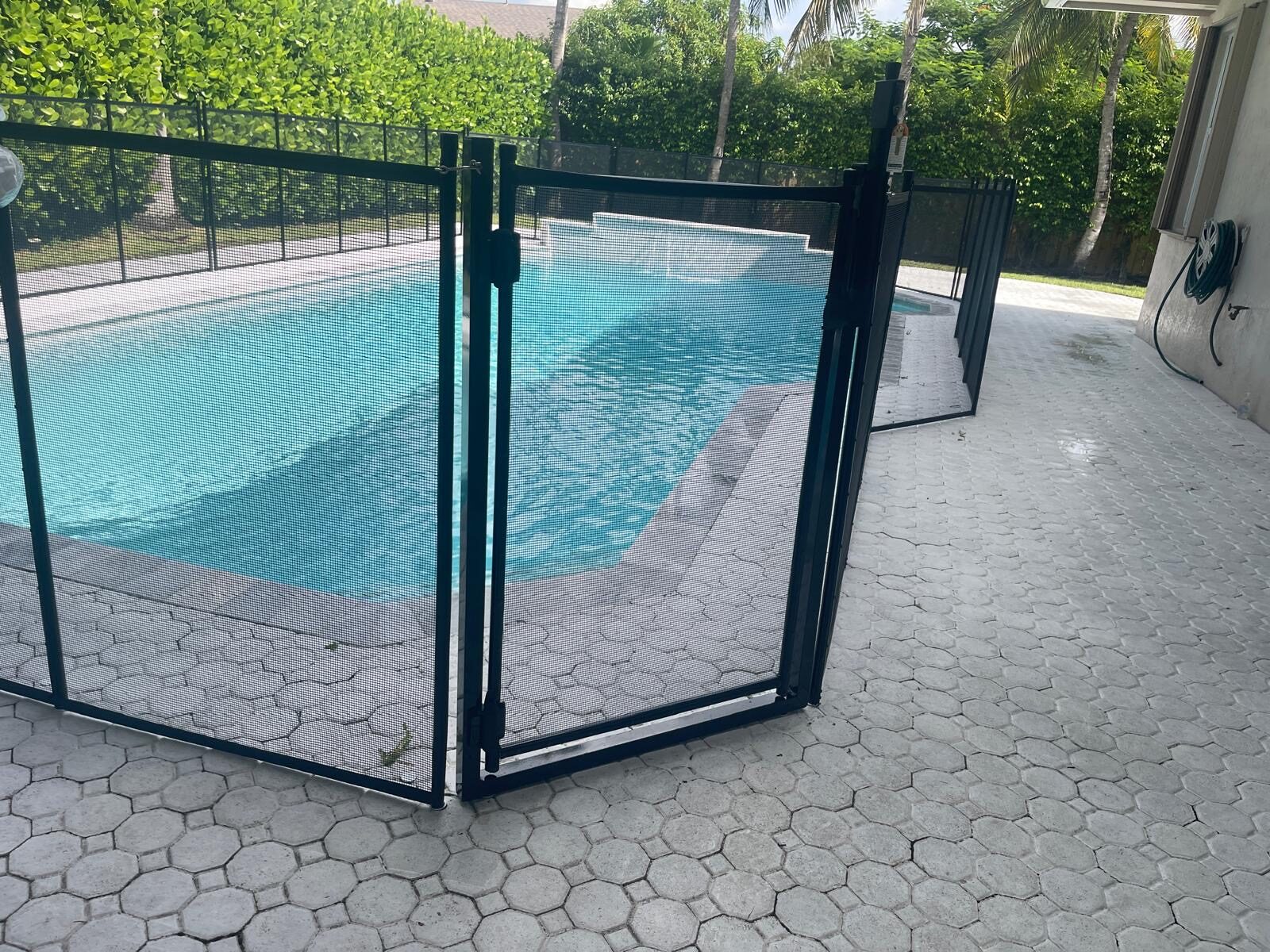
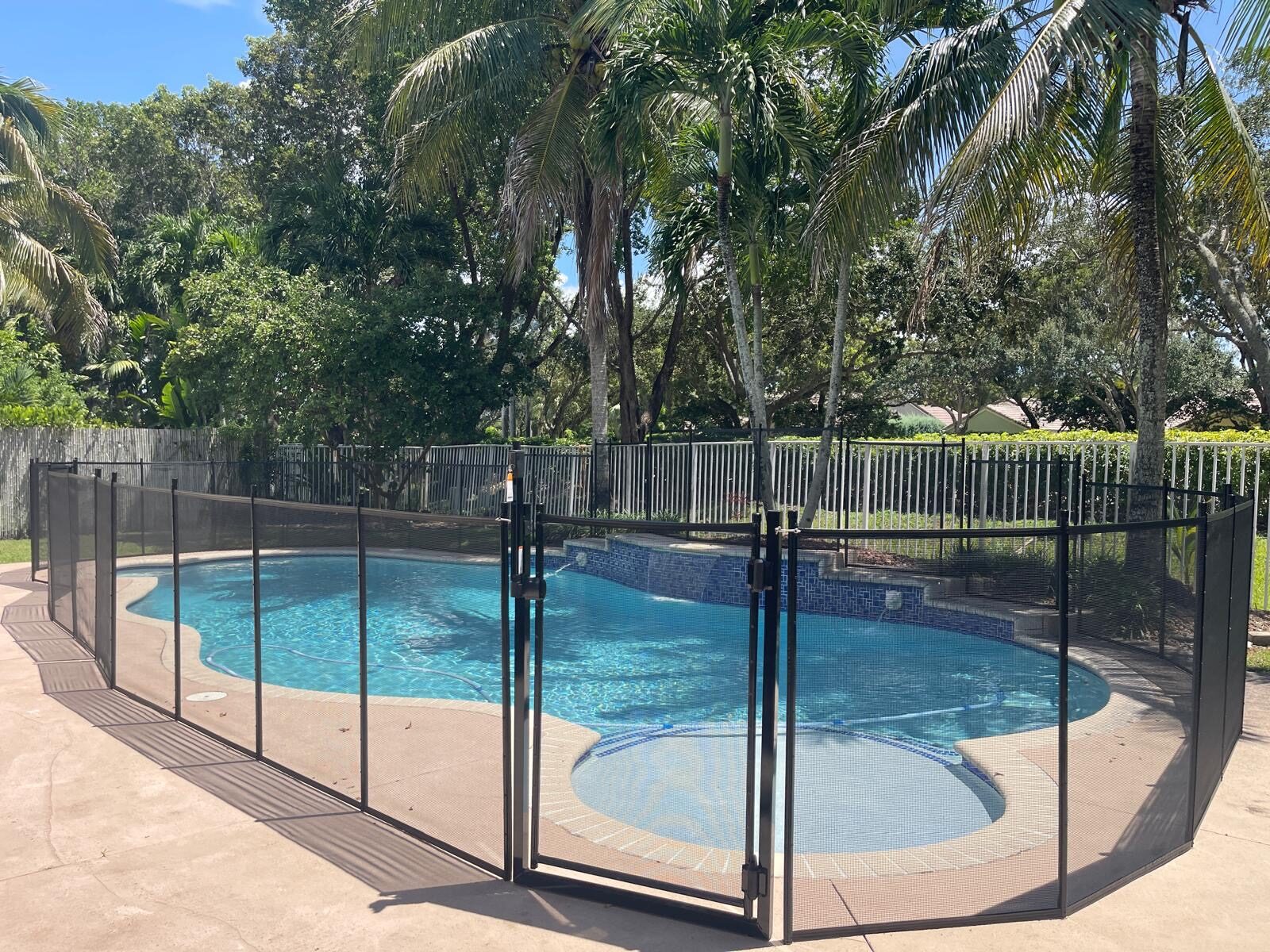
Before creating a checklist, establish what has been installed and approved. Record the barrier route, every gate, doors with direct pool access, alarms, and any safety cover. Obtain the operating instructions for each device. A new manager should not have to guess which switch controls an alarm or whether a cover is intended as a safety device.
Florida Statute 515.27 lists several qualifying safety-feature options for residential pool final inspection, including a qualifying enclosure, approved safety cover, and specified door or pool alarm arrangements. It should not be summarized as a blanket statement that every Florida residential pool has exactly the same fencing obligation. The rental’s local requirements and its approved configuration also matter.
Where a barrier is used, Section 515.29 addresses its height, openings, position, and gate operation, including outward-opening, self-closing, self-latching access gates. Have a qualified professional assess uncertain conditions instead of making a compliance decision from photographs.
Create a simple annotated rental pool safety plan for your team. Label each access point consistently, such as “patio gate” and “bedroom slider.” Those names make later reports much more useful than “the pool door.”
3. Assign Every Check to a Named Person
“The team handles it” is an unreliable instruction when three companies service one house. Write down the rental pool safety tasks each person has actually agreed to perform, the limits of that role, and whom they contact when they find a problem.
- Owner or property manager: maintains the property’s safety plan, arranges qualified repairs, and decides whether the property is ready for the next arrival.
- Turnover lead: performs the agreed visual and operating checks after cleaning, records the results, and reports defects immediately.
- Pool-service provider: handles the agreed water and equipment services and reports observed concerns within that scope.
- Fence or equipment professional: evaluates and repairs the relevant barrier, gate, or device.
- Backup contact: responds when the primary manager is unavailable and knows how to arrange on-site help.
These are recommended operating assignments, not a statement that a contractor assumes the owner’s legal responsibilities. Put them into your management workflow and confirm acceptance with the people involved.
Give the turnover lead authority to flag unresolved rental pool safety concerns. A person who can report a broken latch but cannot stop an automatic “ready for check-in” message has only half the tools needed to do the job.
For after-hours coverage, give the backup contact the same repair contacts and current property instructions as the primary manager. Test the contact route before it is needed. An unanswered office number should lead to a defined backup, rather than leaving a guest to search for another way to reach you.
Use a short handoff message when responsibilities change: “The patio gate check is complete. The alarm check is still outstanding. The pool technician is scheduled next. Please confirm the final review after that visit.” The receiving person should acknowledge what remains, rather than merely replying that they received the message. Include the property identifier when a team manages several homes.
4. Check Again After the Last Vendor Leaves
Timing is as important as the rental pool safety checklist itself. If the cleaner checks the gate at noon and a furniture installer arrives at two, the noon check does not describe the final condition guests will encounter. Plan the last pool-area review after the final scheduled visit and before check-in.
Follow the same rental pool safety check route each time. Begin at the house, follow the normal route to the patio, inspect the barrier, and finish at the guest information station. Consistency helps different team members notice changes.
- Confirm the installed barrier is continuous, with no missing sections or obvious damage.
- Operate each gate according to its manufacturer’s instructions and confirm it closes and latches without being pushed into place.
- Look for objects interfering with the gate’s movement.
- Check the assigned alarms or other devices using their approved test procedures.
- Confirm that service work has not left equipment, tools, or access panels unsecured.
- Record anything that could not be checked and escalate it rather than marking it passed.
Do not invent a universal force test or improvise hardware adjustments. If a device’s instructions are unavailable, get them from the installer or manufacturer and train the person performing the check.
Train substitutes on site before assigning them an independent turnover. Ask the trainee to identify each access point, demonstrate the normal checks, and explain how they would report a failure. A checklist alone cannot show whether someone understands the difference between seeing a gate shut and observing it close and latch correctly. Keep the instructions accessible to the backup team, too.
5. Reset the Patio for Access, Not Just Appearance
A turnover often changes the outdoor layout. A guest moves a lounger into the shade, a cleaner puts a storage box beside the fence, or extra chairs arrive for a larger group. Include the patio arrangement in your rental pool safety reset instructions so it does not depend on one employee’s memory.
Florida’s barrier requirements prohibit locating a barrier where a permanent structure, equipment, or similar object can be used to climb it. As an operating precaution, also look for movable furniture or stored items that create an obvious climbing opportunity. Ask a qualified professional about appropriate placement where space is tight.
Use a reference photograph showing the intended furniture positions and unobstructed gate area. Label it as an arrangement reference, not proof of current safety. The turnover lead still needs to inspect the actual space.
For example, a sectional sofa may fit attractively beside the fence but leave no sensible location for its movable ottoman. Address that during furnishing selection rather than repeatedly telling cleaners to find somewhere else for it. A workable layout is easier to maintain than a rule everyone struggles to follow.
6. Give Guests a Short, Property-Specific Orientation
Guests need rental pool safety instructions they can use while unpacking, not a long paragraph buried in a booking message. Explain the gate’s normal operation, identify the installed safety devices, and provide a direct contact for concerns. If access hardware is unfamiliar, supply a brief demonstration or a clear photograph showing the correct adult operation.
The CPSC’s vacation-rental pool guidance emphasizes both protective features at the property and attentive supervision by parents and caregivers. Your orientation should support that shared practical effort without suggesting that a guest acknowledgment makes the pool risk-free.
A concise rental pool safety card can include:
- Keep pool gates closed; do not prop them open or remove barrier sections.
- Do not disable alarms or change safety-device settings.
- Contact the manager immediately if a gate, latch, alarm, or barrier appears damaged or behaves unexpectedly.
- Choose a responsible adult to supervise children whenever they are in or near the water.
- In an emergency, call 911 and provide the property address printed on this card.
Use the actual property address and verified contact details. Make the card easy to find without putting access codes or unnecessary personal information on public-facing signage.
7. Plan for Arrival, Meals, and Adult Handoffs
Rental pool safety rules should address ordinary moments outside scheduled swimming. During arrival, one adult may unload luggage while another works out the door code. Later, a group may move between the kitchen and patio during dinner. An operating plan should make these transitions easier to discuss.
The CDC recommends close, constant supervision by a responsible adult when children are in or near water. It advises avoiding distractions and alcohol while supervising, and notes that swimming lessons do not remove the need for supervision. These recommendations can be summarized in the welcome information without asking guests to disclose private details about their children.
Offer one concrete example: before the supervising adult leaves to answer the door, another adult explicitly agrees to take over. If no one takes over, swimming ends and the group leaves the pool area together. That is more useful than an ambiguous reminder that “everyone should keep an eye out.”
Make rental pool safety instructions available before guests enter the house. A note first discovered beside the coffee maker the following morning misses the period when the property is most unfamiliar.
8. Decide in Advance What Happens When a Check Fails
A rental pool safety checklist needs a response plan. A gate that sometimes catches is not a passed check. An alarm whose test result is unclear should not be recorded as working simply because it has power.
Establish a stop-and-escalate procedure with the manager and qualified service providers. If a required protective feature fails, prevent access to the affected pool area, arrange assessment, and verify the repair before restoring access. If reliable isolation cannot be maintained, do not proceed with an arrival until the property can be made appropriately safe. Obtain professional and regulatory guidance where needed.
Consider a hypothetical Friday turnover: the cleaner finds that the patio gate needs a push to latch. The next guests arrive that afternoon. The useful response is an immediate call, a precise description, and a qualified repair decision. Photographing the gate closed and leaving guests a warning does not demonstrate that the defect has been resolved.
Decide who handles affected reservations and guest communication. Keep those decisions separate from the technical repair assessment so a busy booking schedule does not become the reason a questionable device is treated as acceptable.
Make the rental pool safety readiness decision visible in your booking workflow. For example:
- Not ready: a protective feature has failed, an essential check is incomplete, or someone has reported an unresolved concern. Notify the manager and explain the exact problem.
- Work scheduled: a qualified provider has accepted the repair request. This is progress, but it is not a completed repair or permission to reopen the pool area.
- Awaiting verification: the provider reports completion, but the designated person has not confirmed the relevant result or received the necessary technical confirmation.
- Ready for arrival: required work and assigned checks are complete, exceptions are resolved, and no later activity has invalidated the review.
These are suggested management labels, not inspection categories established by the city. Adapt them to your operation and the professional guidance for your property.
In the Friday example, a replacement latch being delivered is not enough to change the status. Nor is a message saying that someone “took a look.” The handoff should explain what was repaired, who performed the work, and how the relevant function was verified. If the technician identifies a wider issue, such as the gate’s support or alignment, keep that new concern attached to the same open problem rather than closing the original ticket prematurely.
9. Record Results That Someone Else Can Understand
A useful record answers what was checked, what happened, and who dealt with any exception. Avoid a single checkbox labeled “pool safe,” which conceals the detail a replacement manager needs.
For each rental pool safety review, capture:
- Property identifier, date, time, and checker’s name.
- The access points and devices checked.
- Observed result for each item: passed, failed, or not checked.
- A description and photograph of any defect when useful.
- The person notified and the time of notification.
- Repair or follow-up details and the person who verified the outcome.
- Any later vendor visit that requires another final review.
Describe behavior rather than interpretation. “Patio gate stopped before the latch engaged” gives a repair professional more information than “gate probably needs work.” Keep photographs focused on the equipment and avoid capturing guests or personal belongings unnecessarily.
Records help coordinate maintenance; they do not guarantee compliance or prevent every incident. Ask your insurer and legal adviser about appropriate retention and documentation for your operation rather than inventing a retention period from a generic online checklist.
Review incomplete records with the team while the details are fresh. If the entry says “alarm not checked,” find out whether access was blocked, instructions were missing, or the checker did not understand the procedure. Each explanation calls for a different correction. Repeatedly asking people to be more careful will not solve a missing manual or a scheduling conflict.
10. Review Repeated Problems Before the Next Busy Period
Recurring rental pool safety exceptions are useful information. If cleaners repeatedly struggle with the same latch, arrange assessment and training. If furniture keeps returning to the gate area, revise the layout. If a vendor regularly arrives after the final check, change the schedule or assign another review afterward.
For a longer guest stay, decide in advance how maintenance visits and reported concerns will be handled. A pre-arrival check is a snapshot, so give guests a clear way to report a change and make sure the responsible contact can act on it. Do not promise a response time your staffing cannot support.
If you are adding or replacing a barrier, bring this operating information to the consultation. Explain the guest route, housekeeping access, equipment-service needs, and furniture layout. Florida Pool Fences provides information about pool safety fencing in Coral Springs and its pool-fence installation process. Ask how the proposed configuration can be operated and maintained by the people who actually service your rental.
Revisit your rental pool safety plan after a manager change, new cleaning company, replacement device, or significant patio rearrangement. Those changes can make familiar instructions obsolete even when the pool itself looks the same. Remove superseded instructions from the guest folder and team checklist so there is one current version. An old photograph showing a previous latch is more confusing than no demonstration at all.
Effective rental pool safety is a repeated handoff: the property is checked, exceptions reach someone who can resolve them, and guests receive clear instructions. Build that handoff into every turnover so the condition of the pool area is a deliberate part of preparing the home.