
An existing pool fence can be a useful feature when you buy a Coral Springs home, but the listing photos rarely answer the questions that matter. Is the complete system included in the sale? Do the stored sections belong to the installed fence? Has anyone changed the deck or gate since the fence was fitted? And which pool-safety arrangement appears in the property’s records?
Answer those questions during your inspection period, while you can still coordinate access with the seller and discuss findings with your real estate professionals. Waiting until the moving truck arrives leaves little room to locate missing hardware, identify an older product or arrange a specialist visit.
This existing pool fence checklist is for buyers taking over a previously installed removable mesh system. It separates things you can document from questions requiring a qualified professional or the city. The goal is a complete, understood system and a workable move-in plan, rather than an assumption based on a fence looking tidy.
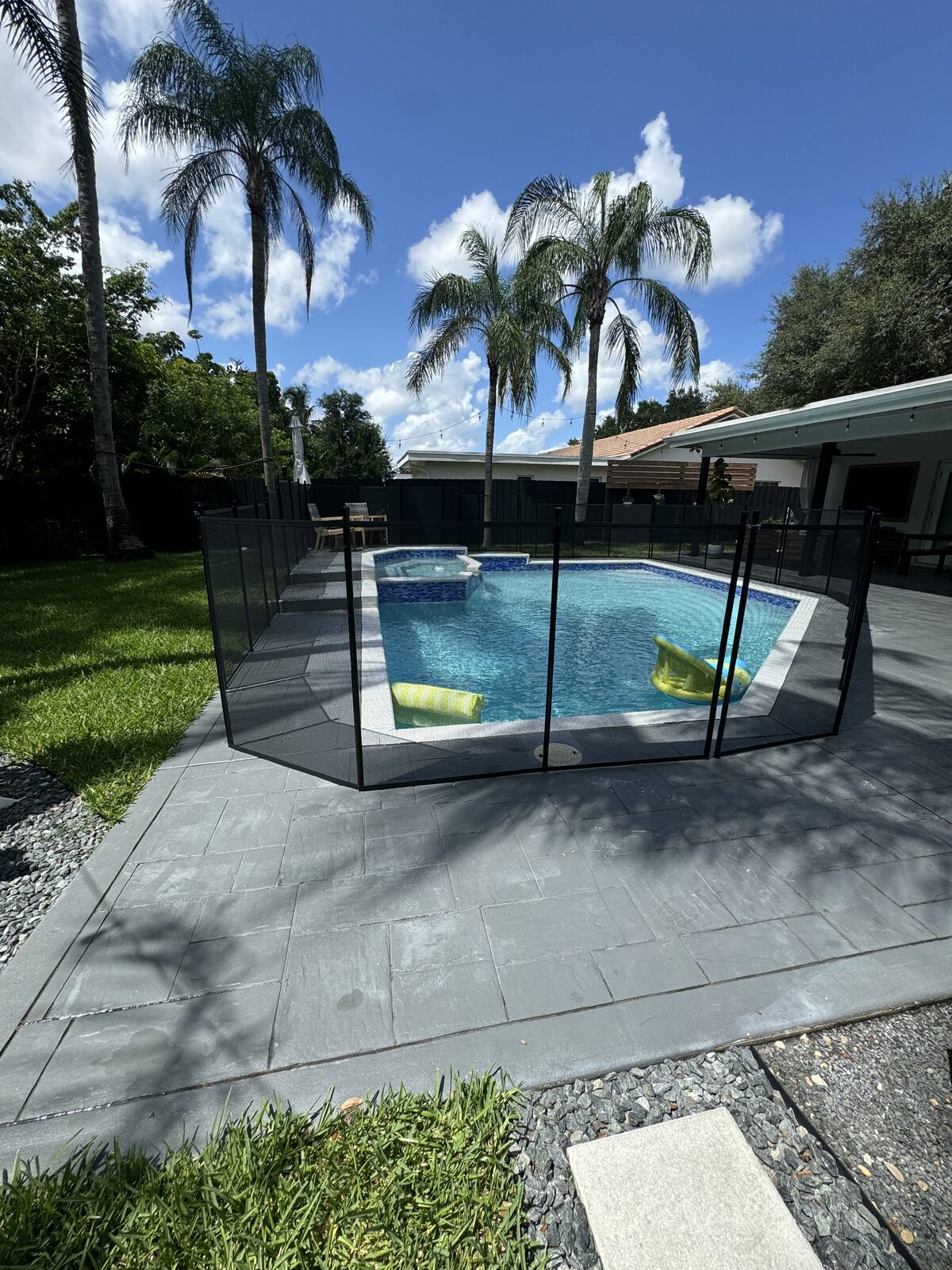
1. Confirm What Comes With the Existing Pool Fence
Start by establishing whether the existing pool fence is part of the sale. A pool fence visible during a showing may be partly removed later to accommodate packing, cleaning or backyard work. Ask the seller to identify every component intended to remain, including sections stored in the garage, gate hardware, keys, sleeve caps and available instructions.
Have your agent handle how that inventory is documented in the transaction. An informal conversation beside the pool is easy to remember differently several weeks later. A dated set of photographs and a simple component list give everyone something concrete to check at the final walkthrough.
Record whether the fence was fully installed when you first saw it. If only some sections were standing, request an opportunity for a qualified person to assemble and assess the complete system with the seller’s permission. A roll of mesh in a shed does not establish that the pool can be enclosed with the parts on hand.
Also ask who last used the system regularly. A seller may know where everything goes; an estate representative or distant owner may have little history. An honest “unknown” is useful information because it tells you which assumptions need independent verification.
2. Build a Property-Specific Records File
Keep the existing pool fence history alongside the pool and deck records. Useful documents include the original fence invoice, manufacturer and model information, installation instructions, later repair receipts, available approved plans, inspection records and photographs taken before a renovation.
The city’s online permitting page explains that active, closed and expired permits can be searched by site address. The Coral Springs eTRAKiT portal also states that a public account is unnecessary for general-information searches. Start with the exact property address and retain the relevant permit numbers for follow-up questions.
Coral Springs separately publishes an Open/Expired Permit Search request form. It identifies information to provide, including the address and folio number, and notes that fees apply. Confirm the current process and turnaround with the Building Department before relying on it for a closing deadline.
A search result needs context. Ask the city about missing plans, unclear status descriptions or the records relevant to later pool-area work. Give your closing professionals any unresolved permit findings so they can advise on the transaction. Neither an empty search nor an old completed permit establishes the present condition of a removable fence.
Keep the resulting file organized by date. That makes it easier to distinguish the original installation from subsequent changes instead of treating every receipt as evidence about the same layout.
3. Identify the Approved Safety Arrangement
Before assuming the existing pool fence was the property’s approved safety feature, find out what the records actually describe. The fence could have been installed with the pool, added later as another layer of protection or altered by a previous owner.
Florida Statute 515.27 lists several safety-feature options in connection with residential pool final inspection and a certificate of completion. These include a qualifying enclosure, an approved safety cover and specified alarm or door-device options. Reading that list does not establish which requirements apply to a particular existing home.
Ask the Coral Springs Building Department to clarify the applicable records and requirements for your address and any proposed changes. Where the paperwork is unclear, describe the actual setup: removable fence, screen enclosure, doors from the house, pool-access gates and any alarms or cover. Photos may help explain the question, but they do not replace a site assessment.
Keep three questions separate: what was approved, what is installed now and what your household needs to use the yard safely. Our guide to pool fences with screen enclosures discusses one common source of confusion: a screened patio and an interior isolation fence can serve different purposes.
If you are considering replacing the fence, changing its route or adding a gate, confirm the approval process before work begins. The seller’s account of an earlier project is background to investigate, rather than permission for a new one.
4. Inventory Sections and Confirm System Compatibility
Give each section of the existing pool fence an identifier in your notes. Photograph its full length, ends, connectors and any label. Keep a separate record of gates and unidentified spare pieces. This helps a professional determine what belongs together without relying on a pile of similar-looking black mesh.
Ask a qualified pool-fence professional to identify the existing pool fence where possible and evaluate the fit of its components. Useful questions include whether the poles and sleeves are appropriate for each other, whether replacement parts are available and whether the fence can form the intended route with the existing sections.
Do not order a replacement simply because its advertised height or color matches. Section length, pole spacing, connection details and gate construction need to work with the specific installation. A part that can be pushed into place may still be inappropriate for the system.
A missing section of an existing pool fence deserves more attention than a rough linear-foot estimate. It may belong at a corner, step or wall termination, where the dimensions differ from a straight run. Let the professional determine what is needed rather than filling the opening with an improvised panel or a borrowed section.
Request a written existing pool fence inventory: identified and reusable components, items needing replacement, and anything that remains uncertain. If identification is impossible or compatible parts cannot be obtained, ask for the available replacement options before deciding whether keeping the old fence is practical.
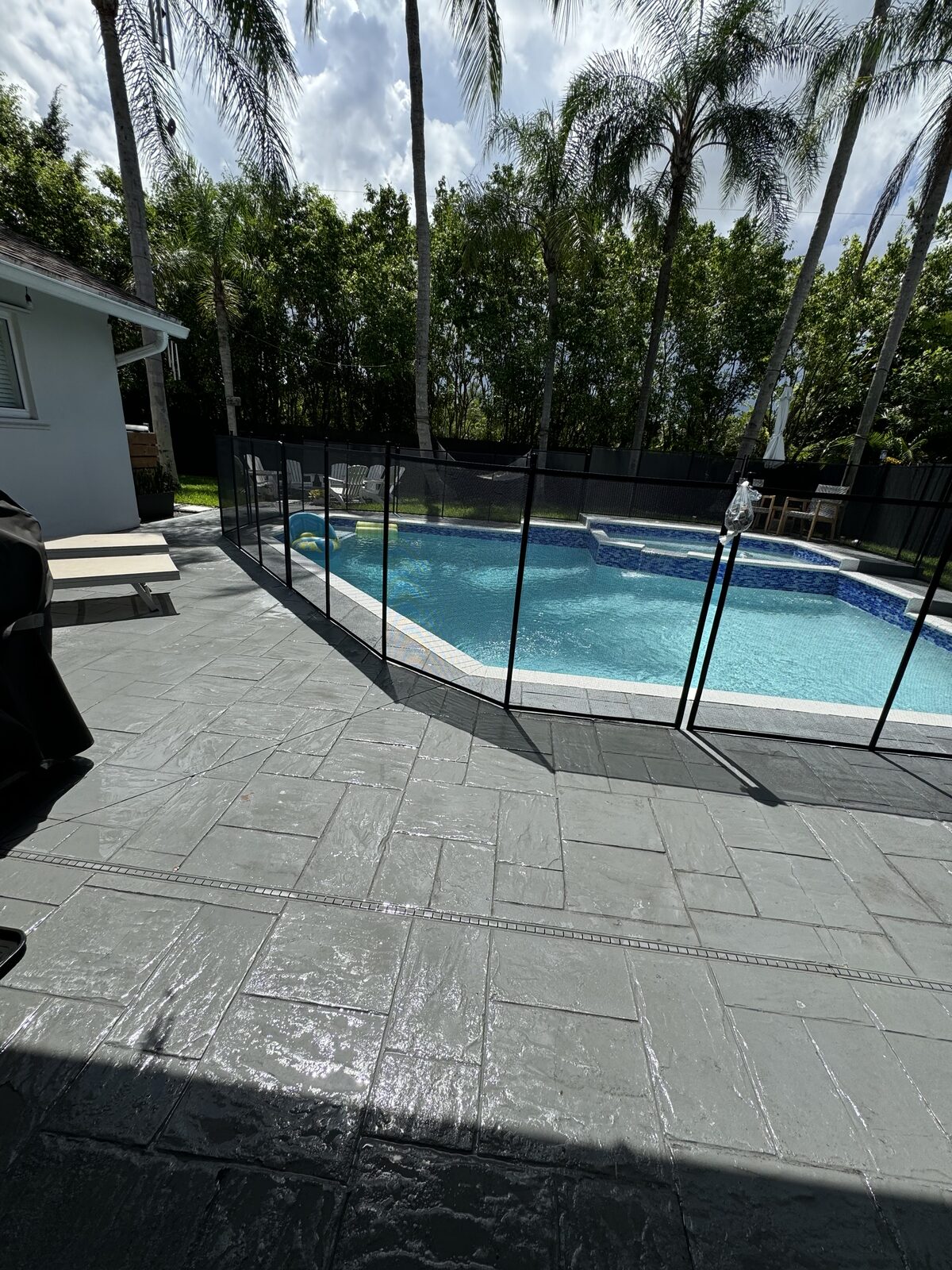
A simple parts manifest for the seller walkthrough
Use one line per section or component group, with five fields: identifier, present location, intended position, identifying label and unresolved question. For example, “Section C; garage shelf; position unconfirmed; label photographed; ask whether it belongs beside the gate.” That wording preserves uncertainty instead of recording a guess as fact.
Add a photo reference to each line and mark whether the item was installed during the professional assessment. If a section remained in storage, record that explicitly. Someone reading the file after closing should be able to tell which components were actually evaluated together.
Useful seller questions include: “Were any sections discarded after the deck work?” “Does this key operate the installed gate hardware?” and “Which installer last supplied replacement parts?” Ask for the answer and any supporting receipt without expecting the seller to certify technical suitability.
5. Separate Your Observations From Professional Inspection
You can document an existing pool fence without dismantling or stress-testing someone else’s property. With permission, walk the accessible route and photograph obvious tears, separated edging, leaning poles, loose-looking connections, missing pieces and changes in the surface beneath the fence.
Note where you saw each issue. “Mesh damage at the section beside the spa” is more useful than “fence looks old.” Photograph the wider area as well as the close-up so the person reviewing it can locate the concern.
A qualified specialist should evaluate system condition, attachment points, tension, gate operation, section connections and how the installation interacts with the deck. Ask what the assessment covers and what it cannot determine. Hidden support conditions or unfamiliar components may require further investigation.
Your general home inspector may flag pool-area concerns, but ask whether detailed removable-fence assessment falls within that inspector’s agreed scope. A pool-equipment inspection, a fence-service visit and a municipal inspection answer different questions. Do not assume one appointment automatically covers them all.
The U.S. Consumer Product Safety Commission’s home-pool barrier guidance is a useful reference on barrier continuity, openings and gate design. Use it to prepare questions, while leaving property-specific measurements, product evaluation and compliance determinations to the appropriate professionals and authority.
Until a damaged or incomplete barrier has been addressed, prevent children from accessing the pool area. Avoid makeshift repairs that create the appearance of a restored barrier without resolving its condition.
6. Investigate the Gate and Every Route Around It
Have the gate assessed as part of the existing pool fence, including its posts, hinges, latch and adjacent sections. Ask the professional to demonstrate normal operation and explain the checks you should perform after you take possession. A gate that needs lifting, a shove or careful alignment warrants attention before routine use.
CPSC recommends outward-opening pedestrian pool gates that self-close and self-latch. The applicable design and installation requirements for your property still need verification. If the existing fence has a manually disconnected opening, make that clear when requesting the assessment rather than describing it as a self-closing gate.
During your visit, trace ordinary walking routes from the house to the water. Include side doors, cabana doors and paths behind furniture. Record places where a person could go around an end or through an opening created by a removed section. Ask the assessor to explain how each termination is intended to work.
Tell the professional how you expect to use the yard. A route that suited the seller’s quiet patio might conflict with your outdoor dining furniture or frequent trips to a side yard. Solve those conflicts deliberately instead of accepting a layout that encourages family members to leave an opening disconnected.
Keep furniture planning in the conversation, too. Storage benches, planters and stacked moving boxes should not create an easy approach over the barrier or obstruct the gate. Review the setup again after your own belongings arrive.
7. Check What Changed After the Original Installation
Ask about deck resurfacing, replaced pavers, added steps, landscaping, screen work and changes to exterior doors. A fence can look consistent from a distance even when its surroundings have changed several times.
Compare older photographs of the existing pool fence with the present yard. Look for a moved gate, a shortened section, a new raised feature or a row of unused deck holes. Treat those clues as questions for the seller and specialist, rather than proof of improper work.
For example, unused sleeves might reflect a previous layout rather than spare positions intended for the current fence. A stored panel might belong to that older route. The useful question is whether the present components, surface and layout work together, not whether enough holes exist to erect something.
If deck work is planned immediately after closing, tell the professional assessing your existing pool fence before accepting a repair proposal. Repairing a route that will soon be disturbed may complicate scheduling and create another period without a complete barrier.
Coordinate the sequence with both contractors: who removes sections if necessary, who protects and evaluates affected components, and who restores and checks the completed fence. Do not let this responsibility fall between trades because each assumes the other is handling it.
8. Put Repairs on the Closing and Move-In Calendar
Turn existing pool fence findings into specific decisions while you still have time to act. A useful written proposal identifies the affected components, recommended work, known limitations and any additional evaluation needed. Ask separately about parts availability and scheduling rather than assuming a small repair can happen immediately.
Discuss transaction choices with your agent and, where appropriate, your attorney. Whether to request seller work, seek a credit or make another arrangement depends on your contract and circumstances. A repair estimate provides information for that conversation; this checklist does not determine your contractual rights.
If work will occur before closing, arrange permission and a way to verify what was completed. Retain the invoice, parts information and any relevant inspection documentation. At the final walkthrough, compare the existing pool fence with the agreed inventory and documented condition.
If work will occur after possession, make a realistic access plan for the intervening period. Do not schedule children’s backyard activities around an unconfirmed repair date. Keep children away from the pool area until the barrier issue has been resolved, and arrange supervision away from moving and contractor activity.
Ask your insurer about any pool-related documentation it requires, and direct unresolved permit questions to the city. A contractor’s repair receipt should not be presented as an insurance acceptance, municipal approval or guarantee of safety.
Plan the delivery route before moving day
Tell movers which entrance to use and whether their route crosses the pool barrier. Avoid routing ordinary deliveries through the pool area when another practical entrance exists. Designate one adult to coordinate access, and arrange separate supervision for children away from the work zone.
If a bulky item appears to require fence removal, pause and check the plan rather than letting a delivery crew improvise. After deliveries, inspect the route for displaced sections, blocked gate travel and boxes left beside the fence. The condition documented at the walkthrough can change during a single busy afternoon.
9. Take Possession With a Complete Operating File
Before the seller leaves, collect the existing pool fence parts and documents in one place. Include identification details, instructions, service contacts, keys and the location of spare components. Keep photographs showing the completed route so a future removal or repair does not depend on memory.
Have the adults responsible for the property learn the manufacturer’s operating and maintenance instructions. If a section must be removed, they need to understand the correct reinstallation process and how to recognize a problem. Ask for professional help when the available instructions do not match the installed system.
Use this final existing pool fence checklist before normal backyard use:
- The installed and stored components match the agreed inventory.
- Identified defects have a documented resolution, with any remaining uncertainty clearly stated.
- The complete fence and gate have been assessed for the actual layout.
- Records and permit questions have been directed to the appropriate professionals.
- Moving boxes, furniture and contractor materials are clear of the barrier and gate.
- Responsible adults know the operating instructions and who to contact for service.
Keep water safety broader than the purchase checklist. The CDC’s pool-safety guidance recommends four-sided isolation fencing and close, constant supervision of children in or near water. An existing pool fence is one part of an ongoing household routine, and its condition needs attention after move-in as well.
Get Help With an Existing Pool Fence in Coral Springs
Buying a home is a good time to resolve an unidentified fence, missing sections or a questionable gate. Gather the property address, wide photos of the route, component labels and your target move-in date before contacting a specialist.
Florida Pool Fences serves Coral Springs homeowners. Contact our team to discuss your existing setup and the next appropriate step. If replacement is recommended, our pool fence installation information can help you prepare for the conversation. Bring the unknowns forward early so the plan reflects the fence you actually own.
This article provides general safety and purchasing information, not legal advice, a professional inspection or a determination of code compliance. Confirm property-specific requirements with the responsible building department and transaction questions with your real estate professionals.