

Removable mesh barriers can help Estero homeowners limit unsupervised access to a backyard pool while keeping the water visible from the patio. Choosing a system takes more than comparing mesh colors. The fence route, gate operation, deck anchors, product documentation, and everyday habits all affect how well the barrier works.
This guide covers seven practical checks for planning, installing, and maintaining removable mesh barriers in Estero. It also explains the difference between Florida’s residential pool safety law, building-code requirements, and local enclosure rules. Use it to prepare questions for your installer and the Village before making changes to your pool area.
On this page
- Understand Estero pool fence requirements
- Plan removable mesh barriers around real access routes
- Check height, openings, and product documentation
- Verify the gate and latch
- Plan for weather, wear, and maintenance
- Coordinate HOA review and installation
- Use removable mesh barriers consistently: checks and FAQs
1. Understand Estero Pool Fence Requirements
Start by separating three questions: which residential safety features apply to your pool, what the building code requires for your project, and what Estero requires around the property’s pool area. An answer to one question does not automatically settle the others.
Section 515.27 of the Florida Residential Swimming Pool Safety Act lists five alternative safety features for the final-inspection requirement. These include an enclosure isolating the pool from home access, an approved safety cover, qualifying door and window exit alarms, qualifying self-closing and self-latching access doors, or a qualifying in-pool alarm.
Each option has conditions. An ordinary pool cover or a generic alarm is not automatically an approved safety feature. Choosing one statutory option also does not waive applicable building-code or local enclosure requirements. Ask the building department how the proposed combination applies to your particular pool.
Estero’s Land Development Code pool enclosure provisions address unauthorized access by people who do not reside on the property. They describe a fence, wall, screen enclosure, or other qualifying structure at least four feet high, measured from outside the enclosed area. Gates must be self-closing and self-latching.
A screen enclosure may therefore matter to the local enclosure review, but that does not establish that it isolates the pool from the home. If a patio door opens directly into the screened pool area, a child leaving the house may still have a clear path to the water.
The Florida Building Commission identifies the 8th Edition (2023) Florida Building Code as effective December 31, 2023. Confirm the applicable edition, amendments, permit requirements, and inspection steps when planning the work, especially for an older pool, a replacement fence, or a changed deck layout.
For project-specific answers, contact Estero Building Department and Permitting Services at 239-221-5036 or [email protected]. Have your address, pool permit information if available, and a sketch ready. Describe where the proposed removable mesh barriers will connect and whether any doors or gates provide direct pool access.
2. Plan Removable Mesh Barriers Around Real Access Routes
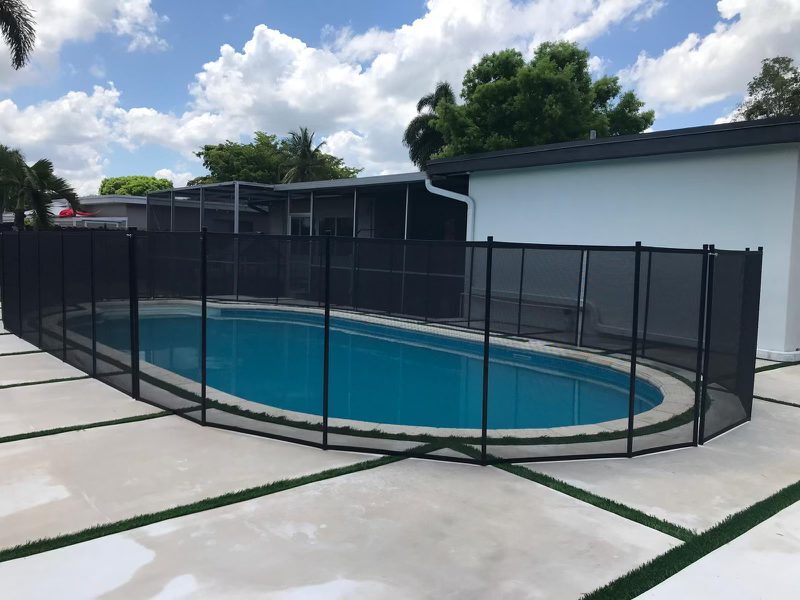
A useful layout starts with how people move through your backyard. Trace the route from every relevant door, outdoor seating area, side-yard gate, and play space to the water. Include a spa or raised area if it creates another way to reach the pool.
For an isolation layout, the goal is a continuous boundary that requires someone to pass through the intended controlled entrance before reaching the pool. A fence that stops beside a planter, leaves an open passage behind furniture, or connects to an unsuitable structure may leave an access route you did not intend.
Discuss every endpoint with the installer. If a house wall or screen-enclosure post will form part of the arrangement, ask how that connection is supported and how openings in the overall boundary are addressed. A convenient attachment point is only useful when the complete layout satisfies the applicable requirements.
Leave enough room for safe movement around the water and the gate. Section 515.29 requires sufficient separation from the water’s edge so someone who gets through the barrier does not immediately fall in. The selected system’s instructions and applicable code provisions may add details your installer must follow.
Removable mesh barriers can preserve useful sightlines, but visibility changes with lighting, mesh color, viewing angle, landscaping, and furniture. Look at samples from the places adults actually sit. Keep the pool visible while recognizing that seeing through a fence does not replace close, attentive supervision.
Think through ordinary tasks before choosing the gate location: carrying towels, walking to a bathroom, servicing equipment, and moving a pool cleaner. A workable route reduces the temptation to leave the gate propped open. Ask to see the proposed gate swing on the actual deck.
Removability should support controlled maintenance when necessary. Keep the barrier assembled and secured whenever the pool is not in supervised use. Removing sections for a party opens access at a time when distractions may increase. Plan gatherings around the installed barrier and designated pool entrance.
To compare available configurations, review our pool safety fence options, then have the proposed route evaluated on your property. Product photographs can help you discuss appearance; the final plan must account for your own doors, deck, and waterline.
3. Check Height, Openings, and Product Documentation
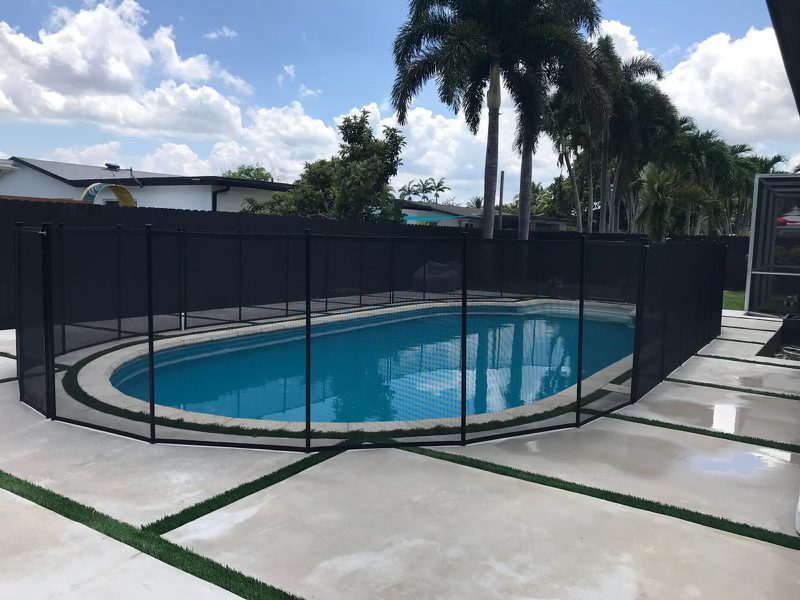
Section 515.29 requires a qualifying residential pool barrier to be at least four feet high on the outside. It also prohibits features that would let a young child crawl underneath, squeeze through, or climb over. Those requirements make the entire installed boundary important, including its bottom edge, corners, and connections.
Measure from the relevant outside surface rather than assuming the label on a fence panel proves the finished height. Changes in deck elevation, adjacent steps, or raised landscaping can affect access. Ask the installer to identify these conditions before drilling begins.
For removable mesh barriers, check the full system: mesh, poles, sleeves, section connections, gate frame, hinges, and latch. A component that looks similar to the original may have different dimensions or performance. Use the manufacturer’s specified parts and installation method rather than mixing products without documented approval.
The Florida Building Commission’s 8th Edition code change summary explains that mesh safety barrier construction is referenced to ASTM F2286. ASTM describes F2286 as a design and performance specification for removable mesh fencing used around pools, hot tubs, and spas.
Ask for documentation tied to the exact fence model and gate configuration being quoted. Useful records include the manufacturer’s installation instructions, applicable testing or compliance reports, product identification, and maintenance guidance. Have the installer explain which standard edition and code provisions apply to your project.
A broad claim that a fence is “ASTM certified” does not identify what was tested, who performed the evaluation, or whether the installed configuration matches it. Request the underlying documentation. Professional installation, by itself, also does not prove that a particular product or layout complies.
Look closely at transitions. The space beneath a panel on an uneven deck, a loose connection beside a gate, or a gap at a wall can matter even when the rest of the fence looks correct. Have the installer demonstrate how the system maintains the specified tension and clearances throughout the route.
Keep potential climbing aids away from the boundary. Chairs, storage boxes, equipment, and planters can change an otherwise workable layout. Section 515.29 also prohibits locating a barrier where a permanent structure or similar object could be used to climb it. Revisit this check after rearranging your patio.
Before accepting the work, walk both sides of the installed fence with the installer. Compare it with the agreed plan and product instructions, record any issues, and complete required inspections. Keep the documentation where you can find it when ordering replacement parts or arranging repairs.
4. Verify the Gate and Latch
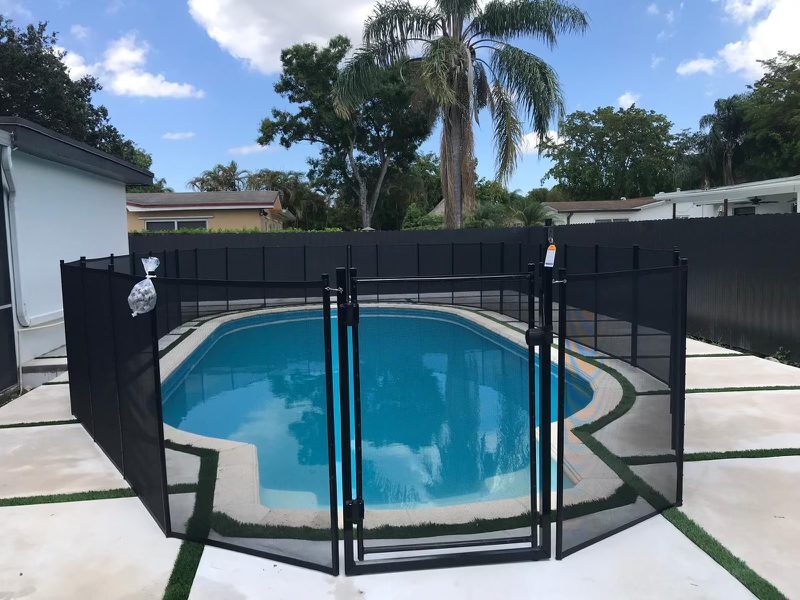
The entrance deserves as much attention as the mesh. A gate that stays open, drags across the deck, or fails to latch leaves a direct route to the pool. A closing mechanism should work reliably without someone having to finish the movement by hand.
Under Section 515.29, pool-access gates must open outward, away from the pool, be self-closing, and have a self-latching locking device. The statute places the release mechanism on the pool side, where a young child cannot reach it over the gate or through a gap. Have the installer verify the applicable gate and hardware details for your configuration.
The law does not prescribe magnetic technology simply because the installation uses mesh. A magnetic latch may be part of a suitable system, but the key questions are whether the selected hardware and its placement meet the applicable requirements and whether the installed gate performs correctly.
Have the installer demonstrate the gate from different opening positions in accordance with the manufacturer’s checks. Watch it close and verify that the latch engages. Ask how to recognize a problem, what adjustments an owner may make, and when a service visit is needed.
For removable mesh barriers, the gate support and nearby panel tension should be evaluated together. Ask whether pulling a section out for authorized maintenance could affect alignment and how the complete system must be checked after reassembly. Keep the supplied instructions instead of relying on memory.
Keep the gate’s swing path clear. A towel basket, toy, hose, or chair can obstruct closure even when the hardware is sound. Avoid hooks, cords, or other improvised devices that hold the entrance open. Show visitors and service providers how the gate should operate.
Do a quick gate check before pool use and after anyone services or changes the barrier. Follow the manufacturer’s maintenance schedule as well. If the gate will not close and latch properly, treat the access route as unsecured and arrange prompt repair while preventing children from reaching the pool.
5. Plan for Weather, Wear, and Maintenance
Outdoor pool equipment needs ongoing attention in Southwest Florida. Sun exposure, rain, pool chemicals, dirt, and any salt exposure can affect materials differently. Ask about the actual mesh, pole finish, sleeves, fasteners, and hardware in the proposed system instead of relying on broad “weatherproof” descriptions.
For removable mesh barriers, request written care guidance and warranty terms. Check what the warranty covers, which maintenance steps it requires, and whether labor or replacement components have different coverage. A corrosion-resistant material still needs inspection, and a protective finish does not justify ignoring damage.
Use cleaning products and methods permitted by the manufacturer. Avoid experimenting with harsh chemicals, abrasive tools, or pressure settings that could damage mesh, stitching, coatings, or hardware. Ask how to handle accidental chemical splashes and how to clean debris around deck sleeves.
During routine checks, look for tears, loose stitching, bent poles, missing connectors, damaged sleeves, and changes in gate movement. Pay attention to a panel that suddenly feels looser than before. Take photographs of concerns and ask the installer whether the affected area needs adjustment or replacement.
Keep heavy objects, towels, and decorations off the fence unless the manufacturer expressly permits them. Added weight can interfere with the system’s intended setup. Teach family members that the barrier and gate are safety equipment and should not be climbed on, leaned against, or used for play.
Include the fence in your severe-weather plan, using the product manufacturer’s instructions and local emergency guidance. If removal is advised, plan how access to the pool will remain controlled while sections are down. Never assume that the removable design provides a wind rating or hurricane protection.
After a storm, impact, deck repair, or reinstallation, inspect the entire boundary before relying on it again. Check the anchors, connections, mesh, and gate together. Arrange help with any damaged or uncertain component, and keep children away from an unsecured pool area.
6. Coordinate HOA Review and Installation
If your property has an HOA or architectural review process, read the actual community documents before scheduling work. Approval requirements vary. Ask whether the proposed fence needs review and what drawings, colors, dimensions, or product information the association expects.
Submit a clear plan showing the route, gate, height, and connections to existing structures. Include photographs where they clarify the arrangement. HOA approval and government requirements are separate checks, so keep both records and make sure any requested design change is also acceptable for pool safety and permitting.
Good installation planning for removable mesh barriers starts below the deck surface. Tell the installer about known repairs, drainage problems, cracks, and any available information about concealed utilities or pool lines. Ask how the deck construction and any paver areas will be evaluated before anchor locations are chosen.
A professional can help with layout, drilling, tension, and gate alignment, but hiring one does not automatically establish Florida pool code compliance. Verify the business credentials applicable to the work, ask about experience with your deck type, and agree on who handles any permits and inspections.
If you are considering a DIY system, first review its instructions and ask the Village about the proposed work. Do not assume every mesh fence uses the same hole depth, pole spacing, or support method. If the deck conditions or layout fall outside the product instructions, resolve that before proceeding.
When comparing quotes, ask each provider to describe the same scope. Useful details include the fence model, height, route, total installed length, gate configuration, deck preparation, necessary approvals, cleanup, and written warranty. A low initial figure is difficult to evaluate when important components are missing.
Our pool fence estimate comparison guide can help organize those questions. Use a written, property-specific proposal for the final decision. Avoid choosing on an unsupported promise that a fence will pass every inspection or last indefinitely without maintenance.
Before the crew leaves, request an operating demonstration, care instructions, and a walk-through of the completed route. Practice using the gate and understand any permitted removal and reinstallation procedure. Resolve loose parts, unexpected gaps, or gate problems before treating the installation as ready for everyday use.
7. Use Removable Mesh Barriers Consistently: Checks and FAQs
The most useful system is one your household keeps assembled, checks, and uses correctly. Make a short routine: inspect the boundary, clear climbing aids, test the gate, and confirm that any sections removed for work have been properly reinstalled. Recheck after visitors or service providers use the pool area.
Removable mesh barriers are one layer of drowning prevention. The CDC recommends close and constant supervision, swimming skills, four-sided pool fencing that separates the pool from the house and yard, and learning CPR. Even children who have had swimming lessons still need supervision.
During gatherings, assign a specific adult to watch children in and around the water without distractions. Make handoffs explicit when that adult needs a break. Keep the gate working normally instead of propping it open for guests, and secure the pool again when supervised swimming ends.
Frequently Asked Questions
Are removable mesh barriers allowed in Estero?
A mesh system may be suitable when its product documentation, layout, installation, and gate satisfy the requirements applicable to the property. Confirm the proposed setup with Estero’s building department. A product description or professional installation alone is not proof of approval.
Does every Florida pool need a separate mesh fence?
Chapter 515 lists alternative safety features, and the required arrangement depends on applicable law and code. Estero also has local enclosure provisions. A separate mesh fence is one possible part of a safety plan; ask the Village to evaluate the complete proposed arrangement.
Is my screen enclosure enough?
A qualifying screen enclosure may serve an enclosure purpose, but it may leave direct access from the house to the pool. Review the doors, windows, gates, and internal layout. Ask which additional safeguards are needed for your home and project.
How high should a pool barrier be?
Section 515.29 specifies at least four feet on the outside for the barrier it describes. Applicable code provisions, product instructions, and site conditions must also be checked. Verify the finished installation rather than relying only on a panel’s advertised height.
Can I remove the fence for a party?
Plan parties with the boundary in place and the gate operating normally. Removing it increases access to the water. If maintenance requires temporary removal, control access throughout the work and restore and check the complete system promptly afterward.
Do I need an HOA approval or a permit?
Check both with the relevant decision-maker: your association for community review, and Estero Building Department and Permitting Services for permits and inspections. Explain whether you are adding, replacing, or relocating the fence and whether the work changes an existing approved layout.
Ready to evaluate removable mesh barriers for your Estero home? Contact Florida Pool Fences to discuss the pool layout, deck, and gate location. Bring the seven checks above to the conversation so your proposal addresses practical use, documented product requirements, and the local review process.