

Pool service access should be part of your pool-fence plan before the first weekly cleaning visit. A technician needs to reach the water and equipment, carry supplies, and move through the yard. Your household needs the barrier to work when that visit ends, including when you are at work or a different technician covers the route.
For a Pembroke Pines homeowner, the useful question is specific: how can the pool company do its job without leaving a removable mesh fence open or creating a routine that depends on someone remembering to rebuild it afterward?
Start with a designated route through the intended gate, a clear agreement about closing up, and a contact who can resolve a problem immediately. If routine maintenance cannot be performed through that route, discuss the layout with the pool company and fence installer together. Repeatedly removing fence sections should not become an improvised weekly workaround.
These seven habits help turn a vague instruction to “close the gate” into a service arrangement adults can actually follow. They are homeowner planning recommendations. Your installed equipment instructions and any requirements that apply to your property still control the details.
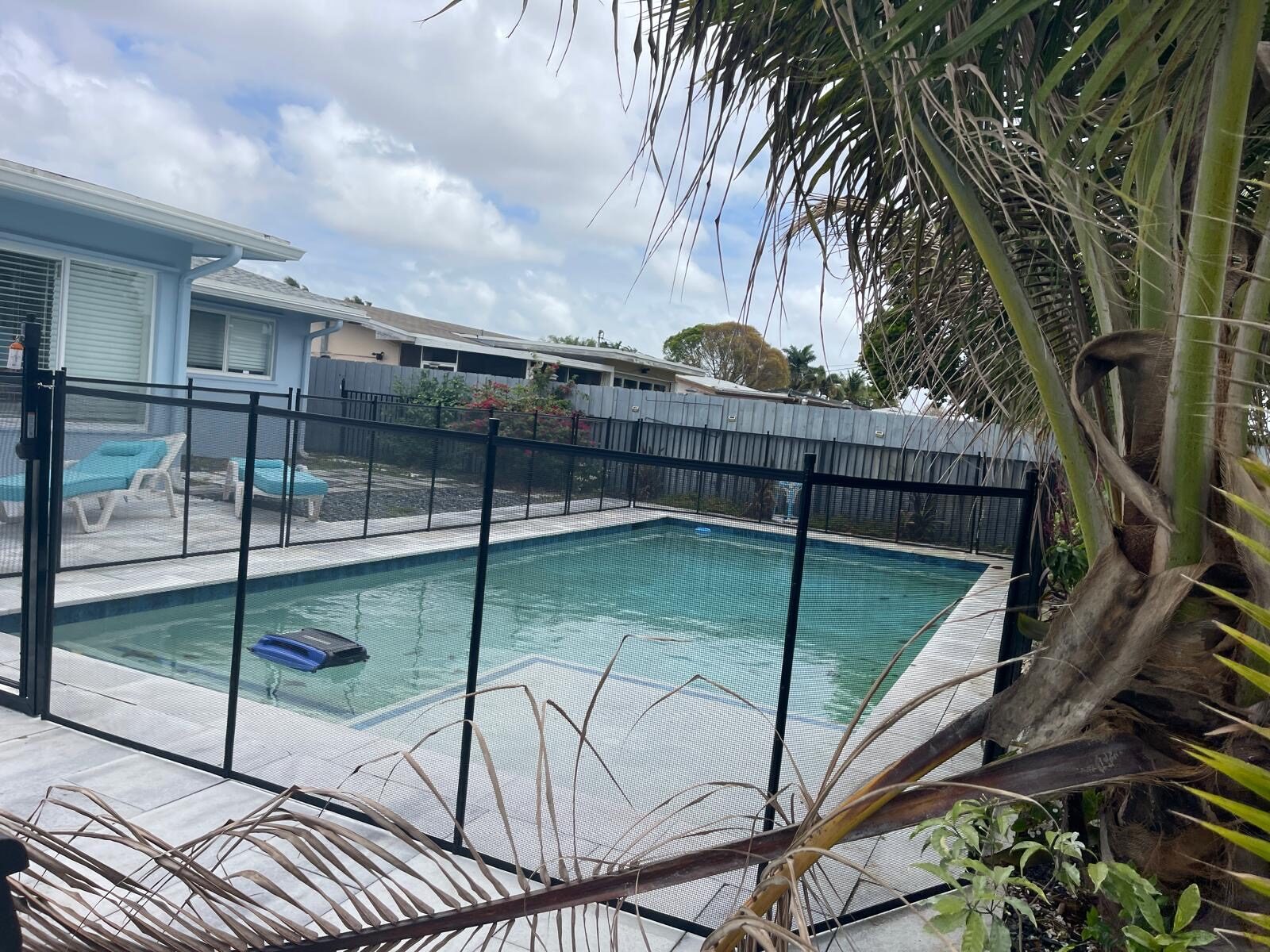
1 Walk the Pool Service Access Route With the Technician
Begin at the entrance the pool company will actually use. Walk from that point to the equipment area and then to the pool. Identify every gate or door along the way. A side-yard gate and a separate mesh pool gate have different jobs, and “the gate is closed” can mean the wrong one if you never distinguish them.
Ask the technician to bring or describe the equipment used on an ordinary visit. A route that looks comfortable when you walk through empty-handed may be awkward while carrying a long cleaning pole or other supplies. Find out whether equipment can be carried through the intended opening without hitting the latch, catching the mesh, or being rested on the fence.
Discuss access to the skimmer and other maintenance points with the pool professional. The purpose is to understand the real task, not to guess how the technician should clean the pool. If a feature is difficult to reach, write down the problem and ask the fence installer about suitable options. Do not decide that a loose panel is an acceptable access opening because it happens to be convenient.
Mark the route on a simple yard sketch or share a clear photograph showing which entrance to use. Keep any access codes or keys separate from a photograph that may be forwarded. The useful information is the route and gate identification; a widely shared image does not need household security details.
Our Pembroke Pines pool fence service page is a starting point for discussing a local barrier layout. Bring the pool company’s access concerns to that conversation so a proposed fence works with ordinary maintenance from the beginning.
2 Agree on Pool Service Access Before the First Unattended Visit
Show the technician how your specific gate is intended to operate. Do not assume every latch, lock, or release works the same way. Use the manufacturer’s instructions or ask the installer for a demonstration if anyone is unsure.
Make the ordinary rule explicit: pass through the intended opening and allow the gate to close and latch after passage. Do not prop it open with a bucket, hose, chair, or tool while walking back to the truck. A shortcut repeated every week can become an assumed part of the service arrangement unless you address it directly.
Ask a practical question: can the normal work be completed with the gate used this way? If the answer is no, find out why. It may be the carrying route, the position of stored equipment, or a different work task than you expected. Resolve that issue before authorizing unattended access rather than telling the technician to “make it work.”
Florida Statute 515.29 includes outward-opening, self-closing gates with a self-latching locking device among its residential barrier provisions. A work routine should not defeat those functions. Ask the responsible professionals about the rules for your property; this article does not determine whether an existing installation complies.
Keep the agreement short enough to remember. For example, identify the side-yard entrance, identify the pool gate, state that neither is to be left propped open, and explain whom to contact if the intended route cannot be used. A clear, property-specific instruction is more useful than a general request to be careful.
3 Keep Hoses Tools and Storage Out of the Closing Path
Look at where equipment sits while cleaning is underway and where it stays afterward. A hose passing through a gate opening can prevent the gate from returning to its normal position. A tool leaned against the mesh can load a component that was never intended as a storage rack.
Ask the pool company to identify a practical staging area that does not obstruct the gate or require supplies to be left against the barrier. Keep that area clear before the visit. If the homeowner’s own chairs and storage boxes block the agreed route, the technician is being asked to improvise around a problem the household can solve first.
Pay attention to equipment you leave in the pool between visits, too. Explain the actual routine for any cleaner, cable, or hose to the fence installer and pool professional. Do not route something over, under, or through a barrier opening merely because it fits. Ask how the equipment can be used without interfering with the intended separation and gate operation.
When supplies are brought in, keep children away from the work area and let the pool professional manage the products according to their instructions. Do not add chemical-handling directions to your fence checklist; that is a separate technical responsibility.
CPSC’s Pool Safely guidance recommends a nonclimbable fence and a self-closing, self-latching access gate. Apply that principle when choosing storage locations: a convenient place to leave a stool or equipment box should not become a way for a child to get over the barrier.
After changing patio furniture, revisit the route. A larger dining set, new outdoor cabinet, or relocated hose reel may affect the service visit even when the fence itself has not moved.
4 Make the Pool Gate Closeout a Defined Part of the Visit
Agree on what the pool company will check before leaving. Ask for a simple closeout that identifies the pool gate, any separate yard entrance, and anything moved during the work. “Service complete” describes the cleaning task; it does not necessarily tell you what happened to the access points.
For the barrier, the closeout should include removing equipment from the gate path, returning moved items to suitable locations, and checking the gate according to the installed system’s instructions. If a fence section was disturbed unexpectedly, that needs specific attention rather than being hidden inside a routine completion message.
Discuss the format with the provider. A short text, a service-app note, or the company’s existing checklist may be enough to record that the agreed checks were made. Avoid demanding a new reporting system when a small addition to the current one will do.
A photograph can help communicate a visible issue, but it cannot prove that a gate closes and latches correctly. A still image of a closed gate leaves out how it got there and what it will do after the next person passes through. Keep the actual operation check in the routine rather than replacing it with a picture.
When you are home, make your own follow-up check before allowing children into the backyard. When you are away, agree in advance who can respond if the technician reports a problem. A notification sent to a phone you cannot answer is not a complete plan for an unsecured pool area.
The point is a reliable handoff. Everyone should know when the work is finished, whether the agreed access arrangement has been restored, and whether something needs attention before normal backyard use resumes.
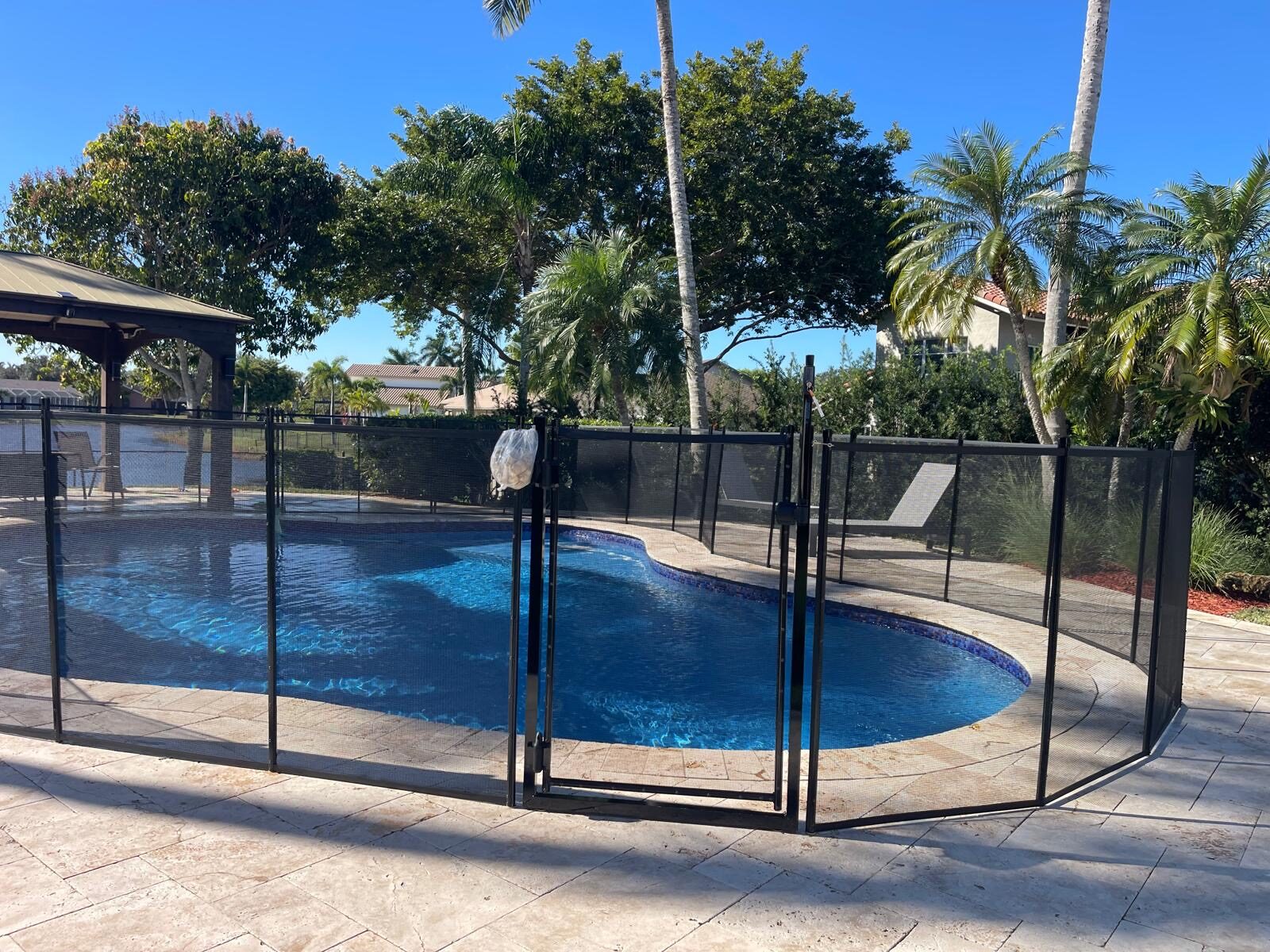
5 Keep Pool Technician Access Clear for Substitute Crews
The person who knows your yard best may not attend every visit. Ask the pool company where property-specific access instructions are stored and how a substitute technician will receive them. A conversation with one person in the driveway may not reach the person who covers their route next month.
Use clear labels in the notes: “side-yard entrance” and “mesh pool gate,” for example. Avoid directions that depend on knowing which gate you mean from a past conversation. Tell the company when a latch or access arrangement changes so an old instruction does not stay attached to the account.
Agree how schedule changes will be communicated. If a visit moves to a time when children are normally outside, the household needs a chance to adjust. Do not assume the pool technician is supervising children while carrying out maintenance.
Pool Safely recommends an attentive adult Water Watcher when children are in or near water. That person’s responsibility should be clear and separate from a contractor’s work. Plan service visits so the technician does not need to work around unsupervised play in the pool area.
Apply the same coordination to overlapping vendors. If the landscaper, pool technician, and another contractor arrive on the same day, each should follow the relevant access instructions rather than assume the last person will close everything. A gate can be reopened after one worker has already completed a careful closeout.
Let the household know that a different visit time does not change its own routine. Before backyard use, check the current condition, especially if more than one person has been working there. Yesterday’s satisfactory gate check says nothing about an entrance opened this morning.
6 Set a Clear Response When Access Cannot Be Secured
Decide what happens if the technician finds a gate that will not work correctly, damage to a fence section, or an access route that cannot be used as agreed. Give the pool company a primary contact and a backup adult who can respond. Ask that a barrier issue be reported immediately, not left only in an end-of-day cleaning report.
The instruction should be to stop relying on the affected barrier and contact the responsible adult. Keep children away from the pool and arrange appropriate protection while the issue is resolved. Do not turn a service technician’s attempt to be helpful into an improvised fence repair.
Separate the maintenance job from any fence work. Authorization to clean the pool does not establish that someone should alter a latch, adjust a post, drill a new hole, or remove panels. Those decisions belong in a discussion with the qualified professional responsible for the installed fence system.
Ask the technician to describe the observed condition plainly: which gate, what happened, and what remains unsecured. “The pool gate does not latch after closing” is more useful than “fence problem.” Where a photograph would help the installer understand the issue, it can accompany that description without being treated as proof of a diagnosis.
If repeated visits require opening the barrier somewhere other than the intended gate, arrange a layout review. Recurring inconvenience is a reason to examine the design and work method together. It is not a reason to normalize a barrier being left incomplete.
For a proposed gate addition, relocation, or other alteration, ask the Pembroke Pines Building Department about applicable approvals before work starts. The city’s guidance includes fence installation among projects generally requiring permits and directs residents to ask when the scope is uncertain. A service-access improvement still needs the appropriate project review.
7 Review Your Pembroke Pines Pool Fence Routine After Changes
Revisit pool service access after a new fence installation, a gate change, a different pool company, or a substantial change to outdoor storage. The aim is to check the assumptions behind the routine rather than add paperwork to every visit.
A short walkthrough can answer the important questions. Does the agreed route still work? Can the technician carry ordinary equipment through it without interference? Are the closing instructions clear? Does the substitute technician have them? Who will respond if the barrier cannot be secured?
Review household changes as well. A visiting grandchild, a new caregiver, or children beginning to use a different part of the yard may make previously unnoticed access habits more important. Explain the pool barrier to the adults responsible for those children, including what to do if a contractor arrives while they are outside.
Keep a simple note of unresolved issues and who is handling each one. Once a change is completed, remove outdated access instructions so the pool company does not have two conflicting versions. Ask for a demonstration if the operating procedure changed.
Our pool fence options can help frame a discussion about the barrier itself. If the work involves modifying the layout, our article on factors that affect installation time explains why the deck and job conditions need assessment. Get a project-specific answer rather than assuming a small access change is automatically a quick adjustment.
Common Questions About Weekly Pool Service Access
Should I take down the mesh fence before every cleaning visit?
Start by asking how maintenance can be completed through the intended gate. Do not make routine panel removal the default. If access is genuinely inadequate, have the pool company and fence installer review the work method and layout together before changing the barrier.
What should we check during the first visit after a new fence is installed?
If possible, be present for the initial service visit. Let the technician use the agreed route with the equipment normally carried, then discuss any difficulty before the next appointment. Review the closeout together and update the written access notes while the details are fresh. If a problem requires an installer assessment, arrange it rather than letting the first workaround become the permanent routine. A first visit is an opportunity to test the plan under ordinary working conditions.
Is a photo of the closed gate enough for the service report?
A photograph can document appearance at one moment. It cannot demonstrate self-closing or latching behavior. Agree on an actual operation check using the installed system’s instructions and use photographs for context when they are helpful.
What if I cannot answer the technician’s call during work?
Provide a backup responsible adult and agree on the response before the first unattended visit. Do not leave the provider to invent a temporary arrangement or assume that sending a message makes an unresolved access problem acceptable.
Does a weekly pool visit replace the homeowner’s fence checks?
No. The provider’s agreed closeout covers that visit. Later activity, weather, or another person’s use can change the condition. Continue the household checks recommended for your installed system and check access before children use the backyard.
Make Pool Service Access Part of the Fence Conversation
A workable pool service access routine begins with the yard as it is used: the technician’s route, the equipment carried, the separate gates, and the adults who respond when something changes. Bring that information to a fence assessment instead of solving maintenance access only after installation.
Contact Florida Pool Fences to discuss your Pembroke Pines barrier layout. A clear access plan gives the pool company a practical way to work and gives your household a better-defined handoff when the visit is finished.