
A Weston pool fence handover checklist is most useful while the installer is still in the yard. This is your chance to learn how the gate works, understand any unusual parts of the layout, and find out whether anything remains open. After the crew leaves, you should have enough information to use the system correctly and recognize when it needs attention.
Set aside time for the fence handover walkthrough rather than trying to fit it into a quick goodbye. Have the adults who regularly use the backyard join you if they can. Bring the agreed scope, keep your phone handy for reference photographs, and ask the installer to demonstrate the things you will need to do yourself.
The seven checks below cover the finished fence and the information that should come with it. They are questions for a practical fence handover, not a substitute for the professional checks or inspections that apply to the project.
1. Start at the House
Begin where people normally step outside. Walk toward the pool and ask the installer to explain how the barrier handles that route. Continue around the entire fence, including the ends, corners, gate, and any change in deck level.
This gives the layout some context. Looking only at the longest straight section can leave the awkward areas out of the conversation. If the fence passes a raised spa, a step, or a narrow patio section, stop there and ask how that transition has been handled.
Compare the finished route with the agreed scope. If the gate moved during installation or a section follows a different line, ask why and make sure the final arrangement is documented. You do not need to become an installer to notice that something differs from the plan.
Have the installer explain which connections are permanent, which components are intended for normal homeowner operation, and what must stay secured. A removable design can include connections that are not meant to be released casually.
Before moving on, ask the installer to check any loose-looking component, uneven section, or detail that concerns you. A photograph can help describe a question later, but the best time to investigate a concern is when the person responsible for the work is present.
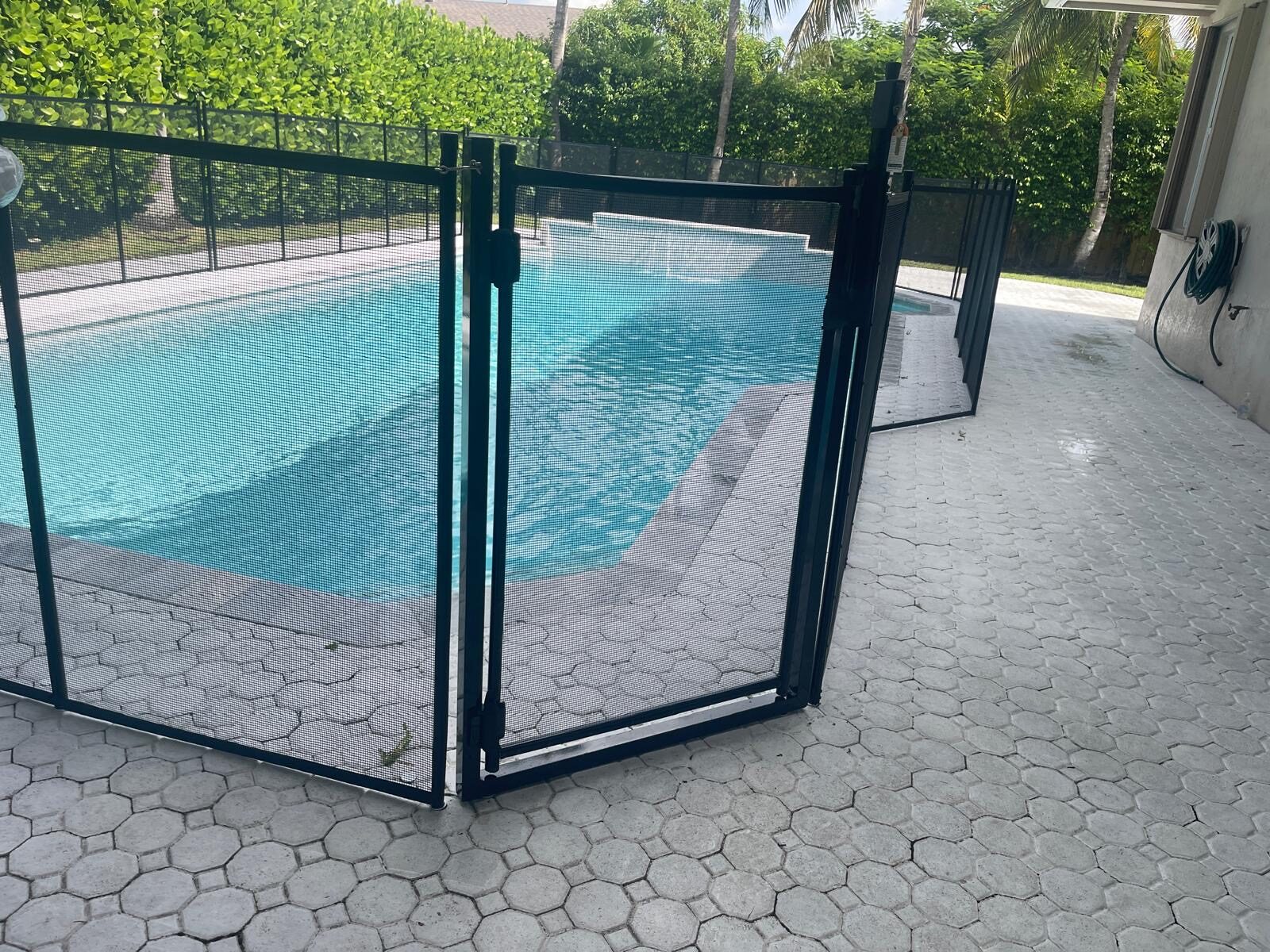
A closer view of a mesh gate and its hardware beside a Weston pool.
2. Practice Using the Pool Gate
Watch the installer demonstrate the gate first, then use it yourself. Ask how to open the latch, how the gate is meant to close, and how any lock works. Keep keys or other access items in a place appropriate for the household and the product instructions.
The CPSC Pool Safely checklist recommends gates that open away from the pool and close and latch automatically. Ask the installer to demonstrate those functions using the checks recommended for your particular gate.
Pay attention to the difference between a gate appearing shut and its latch actually engaging. Have the installer show you how to recognize correct operation without guessing from the sound or the position of the frame.
Use the route as you normally would, with the installer observing. If the latch feels awkward or you cannot tell whether it has engaged, ask for another explanation. The answer should leave you able to repeat the procedure confidently.
A closing or latching problem should be investigated before you rely on the gate. Ask how pool access will be controlled while it is corrected. Do not hold the gate open to work around the problem, and avoid adjusting hinges or substituting hardware without the appropriate instructions.
3. Understand the Removable Fence
Ask whether any sections are intended for homeowner removal and what restrictions apply to the installed system and approved layout. Do not assume that every pole, connection, or endpoint has the same operating procedure.
If removal is permitted, request a supervised demonstration and agree first on how access to the pool will stay controlled. The installer should explain the sequence, storage, replacement of accessories, and the checks needed after the section goes back. Have the installer verify the restored section before the demonstration ends.
This conversation should cover the situation that is actually likely to arise in your yard. Perhaps an equipment technician needs access, or patio work will take place later. Ask whom to contact before that work and which parts of the barrier should remain untouched.
Keep the written product instructions with the project records. A demonstration is easier to remember when you can refer to the correct instructions later. A general video for another fence brand may use different connections or omit a restriction that matters to yours.
If you do not expect to remove the fence, say so. It is still useful to know which items should never be moved and what to tell a gardener, repair contractor, or other person working near the pool.
4. Check the Patio Layout
During installation, furniture and toys may have been moved out of the way. Before treating the layout as finished, think about where those items will return. Walk from the house to the seating area, pool gate, side yard, and equipment with those positions in mind.
Keep objects that could be used as climbing aids away from the barrier. Also check the ordinary friction points: a chair that ends up in the gate’s path, a hose routed through the opening, or a storage box that encourages someone to leave the gate held open.
If a planned piece of furniture conflicts with the fence route, raise the issue before moving a section yourself. The solution needs to preserve the complete barrier and the gate’s intended operation.
Ask how future landscaping or deck work could affect the installation. A new planter edge, paving change, or other alteration near the fence deserves a fresh look. Give anyone doing work in that area clear instructions about whom to contact before disturbing the barrier.
This is where the fence handover becomes specific to your home. The questions should follow your actual doors, steps, deck surfaces, and outdoor routine rather than a layout copied from a neighboring property.
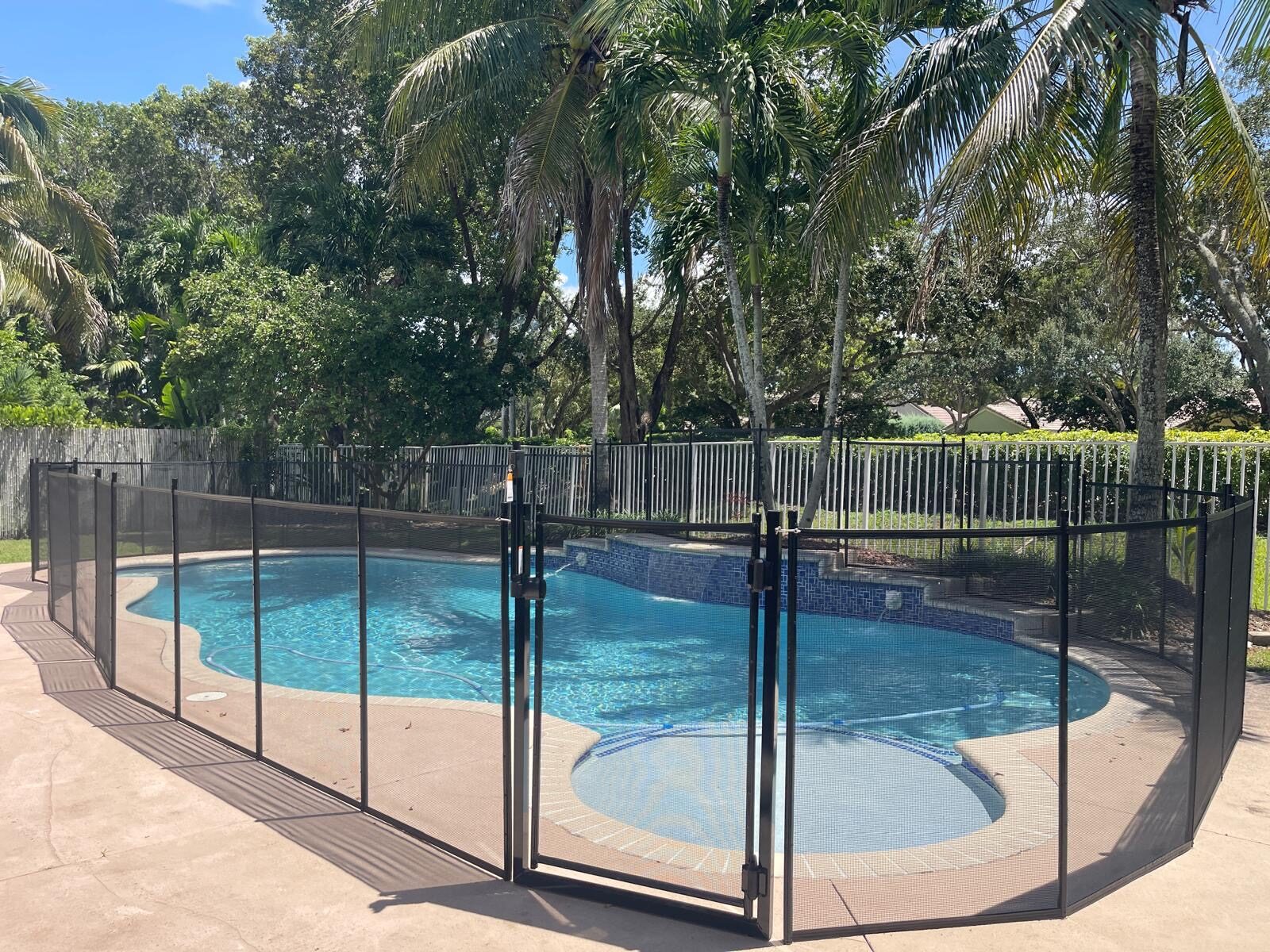
A wide view shows the gate and mesh fence around a pool and raised spa.
5. Get Pool Fence Maintenance Instructions
Ask for the product names and the instructions that apply to the fence, gate, latch, and hinges. Confirm which cleaning products and maintenance procedures the manufacturer permits. Avoid relying on a verbal instruction such as “just lubricate it occasionally” without knowing the appropriate product and method.
Have the installer point out what a change in condition could look like. Useful examples include damaged mesh, a moving component, a change in fence tension, or a gate that behaves differently from the demonstration. You should know which observations call for a service visit and how to control access while a problem is being addressed.
Ask what to review routinely and after other work near the pool. If a maintenance schedule is provided, keep it with the product information. Do not invent your own adjustment routine from a general online tip.
Record the service contact and what information is useful when reporting a problem. The installation date, product name, a clear description, and photographs may help the installer understand the issue. Photographs are supporting information; they do not replace an on-site or functional check when one is needed.
Warranty questions belong in the same conversation. Ask for the written terms for the products actually installed, including any care obligations, exclusions, and claim procedure. Keep those terms rather than relying on a remembered phrase from the sales discussion.
6. Review Weston Project Records
Collect the final scope, invoice, product documents, warranty terms, and reference photographs. Where permits or inspections apply, add the permit number, approved plans, inspection results, and any outstanding corrections.
Weston’s Building Code Services page identifies the City’s ePermits services, including permit and inspection status review. Use the City’s resources and your project team to confirm the status of your own permit. A completed installation and a closed permit record are different milestones.
Ask one direct question before the fence handover ends: “What, if anything, is still required to close out this project?” If something remains, write down the item, the responsible person, and the next step. An unresolved correction should not disappear into a general promise to return.
Keep any association approval with the records if it applies to your property. It addresses the association’s process; it does not establish that a required building inspection has been completed.
For broader context, our Florida pool fence laws guide explains the main safety and inspection questions. For decisions about this installation, work from the current requirements and approved plans applicable to your property.
7. Share the Fence Handover
The person who booked the installation may not be the only person opening the gate. Other adults in the household and visiting caregivers need to understand the routine too.
Show them the operating procedure and where the instructions are kept. Explain how to recognize a latch that has not engaged, whom to contact if the fence is damaged, and why the gate must not be propped open. Keep the explanation practical enough that it can be repeated before a visit.
Agree on how problems will be reported and who will arrange service. A concern noticed by one person is easier to miss if everyone assumes someone else has already dealt with it.
The CPSC emphasizes supervision even when barriers are installed. Continue attentive adult supervision around water and the other appropriate safety measures for your household.
Your Weston pool fence handover checklist before the installer leaves
You should be able to explain the fence route, operate the gate correctly, and find the instructions for the system. You should also know whether a permit or correction remains open and whom to contact when something changes.
If any of those answers is unclear, ask for the missing demonstration or record while everyone is still together. A short note of the final arrangement is useful months later, particularly when another contractor works on the patio or a component needs service.
Questions that are worth asking during handover
Is the walkthrough the same as a final inspection?
No. The walkthrough helps you learn the system and identify questions. Any required municipal or other authorized inspection must be completed through the applicable process.
Should I remove a section just to practice?
Only ask for that demonstration if removal is permitted for the specific section and installed system. Agree on pool-access controls first, and have the installer verify the reinstallation afterward.
What if the gate works for the installer but feels difficult to me?
Try it while the installer watches. Ask them to explain the intended operation and investigate anything that is not functioning correctly. The fence handover should leave the adults who use the gate able to operate it as designed.
What is useful to photograph?
Keep an overall view of the route and separate views of the gate, ends, corners, and special transitions. Store product labels and paperwork privately. A photo record is helpful for later conversations without being proof of code compliance.
Arrange a handover that answers your questions
Our Weston pool safety fence page covers local installation and layout options. When you contact Florida Pool Fences or call (954) 605-5454, ask what the final walkthrough will include and mention any access needs that should shape the layout.
Keep this Weston pool fence handover checklist with the project information. The goal is to finish with a fence you understand, clear records, and a dependable way to get help if its condition changes.
Write down the fence handover answers
Bring a short list with three columns: the question, the installer’s answer, and anything still to do. A fence handover is easier to follow when operating instructions are separate from unfinished work. For example, learning the intended latch action is an instruction; a latch that does not work correctly is an issue that needs a responsible person and a next step.
Photograph the product label or save the model information the installer provides, then keep the matching instructions with your records. Ask which number to call for a service concern and what photographs would help explain it. Before ending the fence handover, read back the unresolved items so both sides understand the same list. This written summary is a practical household reference, not a certificate of compliance or a substitute for an inspection.
Turn the fence handover into a usable household routine
The first week after installation is a useful time to notice questions that did not come up while the crew was present. Keep the installer’s instructions accessible and ask the adults who use the yard to point out anything they do not understand. Do not treat a new fence as a reason to reduce supervision. The goal is to make the agreed operating routine easy to follow when the yard is busy, not only during a quiet demonstration.
Separate a question from a fault
A question might be which cleaning method the manufacturer recommends or where replacement instructions are kept. A fault might be a gate that is no longer latching or a connection that has become loose. Tell the service contact what you actually observe rather than diagnosing the cause yourself. Include the product information from the fence handover, a wide photograph of the location, and a close view of the concern when useful. Keep access controlled while a problem is being assessed; a message requesting service does not itself correct the condition.
Explain the routine to occasional visitors
Grandparents, babysitters, guests, and workers may use the yard differently from the homeowner. Before they need access, show them the intended gate operation and explain that it must not be held open for convenience. Make the responsible adult’s role clear during gatherings. The fence handover record can help the household give consistent instructions, but it should not become a substitute for an adult watching children around water.
Review the yard after other work
Landscaping, pressure cleaning, patio furniture deliveries, and repairs can change what is beside the barrier. After that work, look for items left against it, obstructed gate movement, or visible changes to the fence. Do not guess at adjustments that affect the product. Refer back to the operating instructions or ask the installer. If the work requires a section to be removed, agree on access controls and the person responsible for restoring and checking it before the work starts.
Keep service information easy to find
Save the business contact, product information, instructions, photographs, and any unresolved-item list together. A useful file name identifies the property and installation, while a simple note distinguishes the original fence handover from a later service visit. When an issue is corrected, record what was done and the date the installer provided the answer. Keep the record factual: a photograph shows a visible condition; it does not prove a closing action or replace an inspection result. This small amount of organization makes later conversations much more specific and helps another household member pick up the task without starting over.