

Coral Springs pool statistics are useful only when the numbers describe what was actually measured. This guide brings together national and Florida drowning data relevant to Coral Springs families, followed by practical pool safety facts. It does not present those figures as a count of pools, accidents, or pool-owning households within the city.
The distinction matters when you are buying a pool home, welcoming grandchildren, or choosing a barrier for an existing backyard. A national report can help explain why prevention deserves attention. Your property layout, household routines, equipment condition, and local permit requirements determine the questions you need to address at home.
Below are fifteen essential facts, with direct links to the agencies behind the numbers and guidance. The statistical reporting periods differ, so each figure includes its geography, population, and dates. The practical sections turn that information into questions you can discuss with caregivers, swimming instructors, and a qualified pool barrier installer.
1. Coral Springs pool statistics need a national context
CPSC’s 2026 report recorded an annual average of 376 reported U.S. pool- or spa-related drowning deaths among children younger than fifteen during 2021–2023. These are minimum reported counts, not population trend estimates. Read the CPSC report.
For a homeowner, the practical starting point is to identify opportunities for unsupervised access. Walk from the rooms your family uses most toward the pool. Include a guest bedroom, a bathroom exit, a garage-side path, and any door that visitors may use differently from the people who live there.
Put those routes on a simple sketch before discussing products. This makes a conversation with an installer more useful than beginning with fence color or a preferred gate location. Ask how the proposed layout handles each route and what needs to happen whenever someone opens a door, removes a panel, or brings equipment into the yard.
2. Young children make up most fatalities
Children younger than five accounted for 77% of those reported child pool and spa fatalities in CPSC’s 2021–2023 data. See the report’s fatality findings.
That age breakdown makes visiting toddlers an important part of planning, even in a household without young children. Before a family visit, ask where children will play, nap, eat, and enter the backyard. A setup that feels familiar to adults may be unfamiliar to a visiting caregiver who has never operated the pool gate.
Use Coral Springs pool statistics as a prompt for that conversation, rather than a prediction about an individual child. Arrange a walkthrough while children are elsewhere with another responsible adult. Let the visiting caregiver operate the gate and explain the house rules in their own words. Questions are easier to resolve before everyone is unpacking, cooking, or getting ready to swim.
3. Nonfatal incidents also matter
CPSC estimated 5,900 U.S. emergency-department-treated nonfatal pool or spa drowning injuries annually among children younger than fifteen during 2023–2025. This is a national estimate. See the injury estimates.
When reading Coral Springs pool statistics, keep the difference between an estimate and a reported count in view. Neither figure tells you how many children were treated in Coral Springs. Avoid using national totals to calculate a neighborhood incident rate without a matching local dataset and an appropriate population denominator.
A useful household response is to prepare an emergency information sheet. Write down the property address, access instructions for the backyard, and where adults can find a phone and rescue equipment. Review the sheet with regular caregivers. Keep it somewhere they can find without searching through a locked phone, an unfamiliar app, or a stack of appliance manuals.
4. Young children dominate injury estimates
Children younger than five represented 71% of CPSC’s estimated child pool and spa emergency-department injuries during 2023–2025. Review the age breakdown.
Plan for the moments around swimming as carefully as the swim itself. Think through arriving home with groceries, answering the front door, changing wet clothes, and moving food outside. Write down who is responsible for the children during these transitions. If the answer is vague, make the arrangement clearer before the next pool day.
This is also a useful exercise before hosting guests of different ages. An older child’s independence should not determine the arrangement for a toddler. Ask each caregiver about the children they are responsible for and agree on where everyone will be when swimming finishes. A practical plan should still make sense when someone needs a bathroom break or leaves earlier than expected.
5. Emergency care can require hospitalization
In CPSC’s 2023–2025 pool and spa injury estimates for children younger than fifteen, 42% involved hospital admission or treatment followed by transfer to another hospital. See the treatment disposition findings.
Preparation is worth discussing before an emergency forces hurried decisions. A family meeting can establish who calls for help, who directs responders to the property, and who stays with other children. Make sure adults understand the plan and know where the written address and access instructions are kept.
Coral Springs pool statistics should encourage practical preparation without turning a blog into medical advice. Choose a recognized first-aid and CPR course for instruction and practice. Ask the instructor how the training applies to a backyard pool setting. During an actual emergency, call emergency services and follow the dispatcher’s instructions rather than trying to reconstruct a technique from something you read online.
6. CDC drowning totals cover broader populations and settings
CDC reports annual averages of 4,083 U.S. unintentional drowning deaths and 8,111 estimated emergency department visits for nonfatal drowning during 2012–2021. These figures cover broader age groups and water settings than CPSC’s child pool and spa report. Read CDC’s drowning facts and footnotes.
Do not add these figures to the CPSC totals. They describe overlapping subject matter using different populations and reporting periods. Similarly, their size does not establish that Coral Springs pool statistics are improving or worsening. A credible local trend would require comparable local observations across time.
For household planning, include every place where family members spend time around water. Your backyard arrangement may need to be discussed alongside a grandparent’s pool, a vacation rental, or a community swimming facility. Before a visit, ask who will supervise, what access controls exist, and how the group will respond if the setting differs from what everyone expected.
7. Florida’s drowning burden extends beyond backyard pools
The Florida Department of Health states that more than 500 Floridians died from unintentional drowning in 2023. This statewide measure includes different water settings and age groups; it is not a Coral Springs pool death count. See Florida’s drowning prevention resources.
For a home near a canal or another waterway, review the route toward that water as well as the route to the pool. Make a note of side yards, shared access points, and places where landscaping can obscure your view. Bring questions about property boundaries and any proposed fence location to the appropriate local department.
The value of Coral Springs pool statistics is in helping you ask better questions. A statewide total cannot tell you which barrier layout fits your lot. Use a survey and an on-site assessment to connect broader safety concerns with the actual features of your property, especially when the pool, yard boundary, and waterway create different access issues.
8. A pool barrier should address the route from home to water
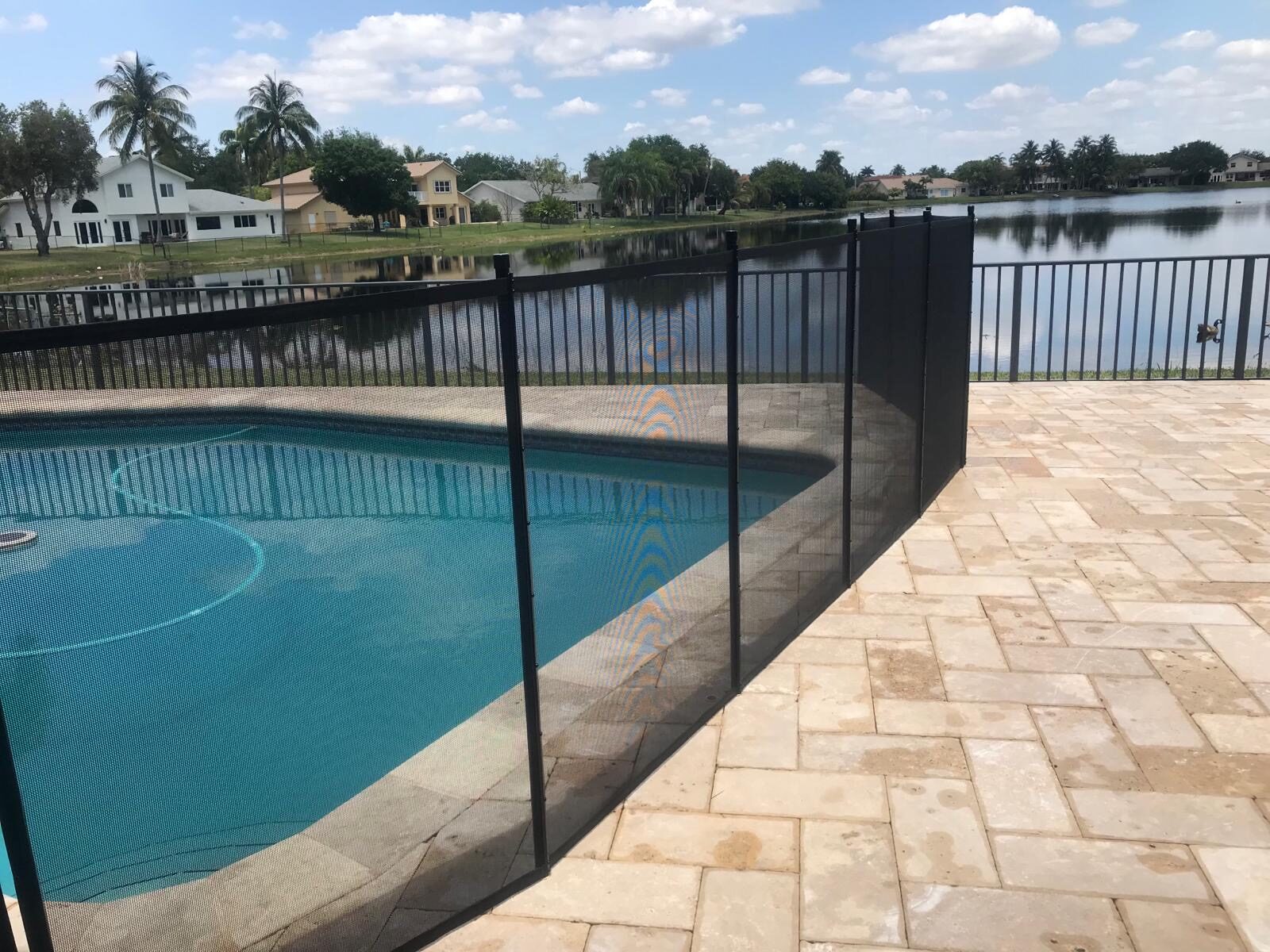
CDC recommends a fence surrounding the pool on all sides and separating it from the house, with gates that close and latch automatically. Its guidance emphasizes limiting unsupervised access. Read CDC’s prevention guidance.
Translate Coral Springs pool statistics into a layout discussion: can someone step from the living area onto the pool deck without crossing a dedicated barrier? A yard boundary and a pool isolation barrier may serve different purposes. Ask your installer to identify exactly which entry routes the proposed system addresses.
If your pool sits inside a screened enclosure, include every house door and enclosure door in that review. The presence of screening alone does not establish that the arrangement satisfies applicable pool barrier requirements. Our guide to a pool fence with a screen enclosure explains the layout questions worth taking to an installer.
Bring photographs of the full deck, door thresholds, steps, and narrow passages. Ask to see the proposed gate swing and walking route on a plan before installation. For an overview of available systems, review our pool fences page and discuss suitability for your particular deck and household.
9. A working gate is essential to a working barrier
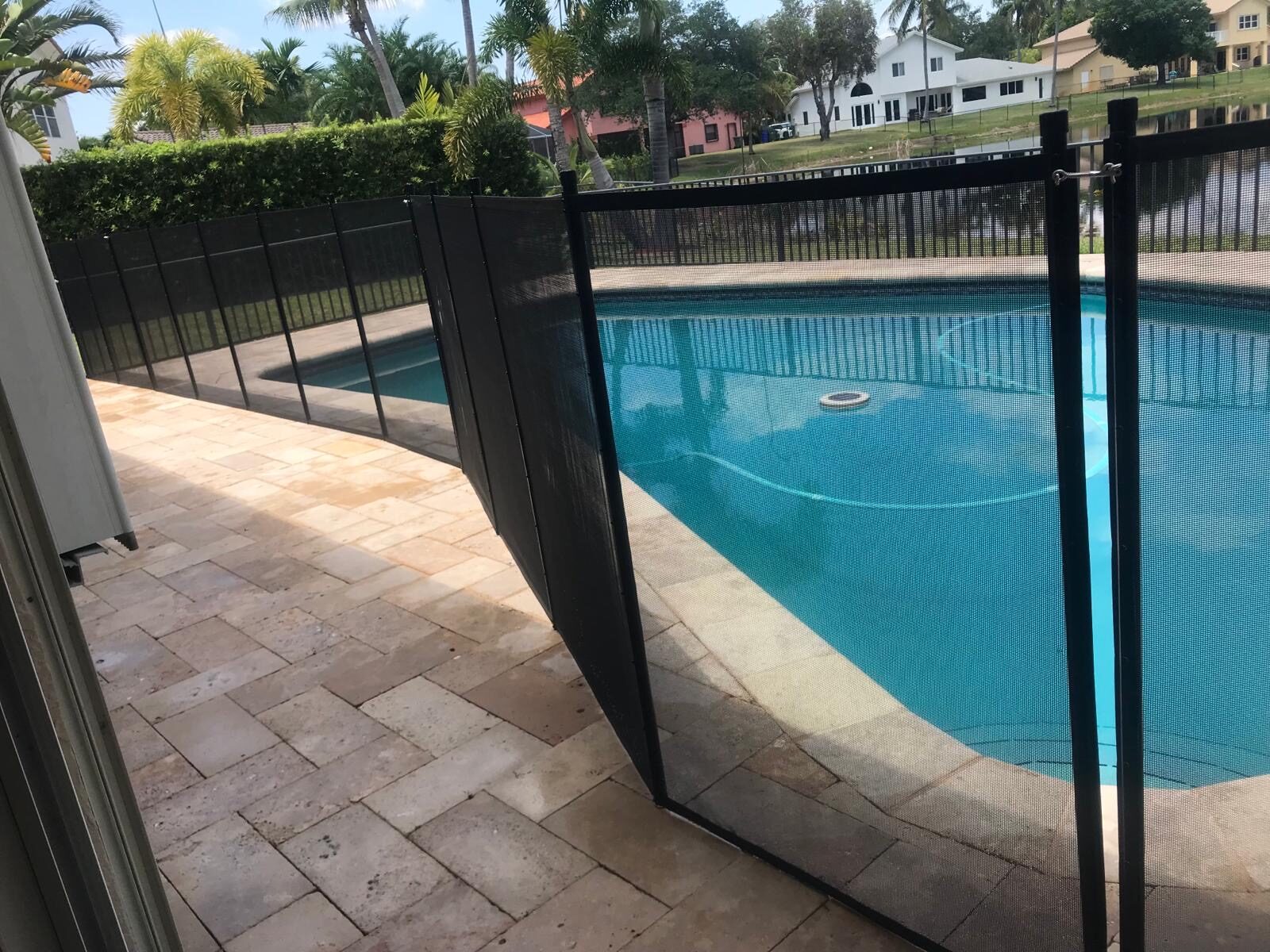
Florida’s statutory barrier provisions address outward-opening pool access gates, automatic closing, and a self-latching locking device. They also address access to the release mechanism. The exact installation must be reviewed against all applicable requirements. Read Florida Statutes section 515.29.
Ask the installer to demonstrate normal gate operation and provide the manufacturer’s care instructions. During the handover, have each adult who regularly uses the pool operate the gate. Clarify how to recognize incomplete latching and whom to contact if the gate drags, shifts, or no longer works as demonstrated.
A maintenance note can be simple: list the product, installer contact, inspection instructions, and any issue that needs attention. Keep a photograph of the original completed layout for reference when scheduling service. If work on the deck or surrounding area changes the gate’s movement, arrange another review rather than assuming the original installation remains unaffected.
Tell pool service providers and other visitors how access should be handled. Plan deliveries and equipment movement in advance so nobody has to improvise a way through the barrier while children are nearby.
10. Active supervision needs a clearly assigned adult
Pool Safely advises designating an adult water watcher, avoiding distractions, and staying close enough to reach young or inexperienced swimmers. Read Pool Safely’s supervision guidance.
For a gathering, decide who has that responsibility before anyone enters the water. A clear handoff is easier to follow than an assumption that all the adults are watching. When the supervising adult needs to stop, have another responsible adult explicitly accept the role before the first person steps away.
Build the meal and hosting arrangements around this responsibility. Someone else can answer the door, manage the grill, or take photographs while the water watcher concentrates on the swimmers. If the adults available cannot cover both activities, change the plan rather than asking one person to do everything at once.
Use the same approach for brief visits and informal evenings. Familiarity with the yard should not make responsibility less clear. Before guests arrive, explain the pool rules in ordinary language and ask them to check with the supervising adult before taking a child toward the water or leaving the pool area.
11. Swimming lessons support a wider safety plan
CDC says formal swimming instruction can lower drowning risk, while children who have taken lessons still require close supervision. The American Red Cross also recommends appropriate life jackets for young or inexperienced swimmers and warns against relying on inflatable toys for protection. Read CDC’s swimming guidance and Red Cross swimming safety advice.
The city lists Coral Springs aquatic classes and swim programs. When selecting lessons, ask the instructor what skills will be taught and how progress will be assessed. Explain the settings where your child usually swims. A useful conversation covers water entry, getting to an exit, and how adults should support practice between lessons, within the instructor’s guidance.
Coral Springs pool statistics do not provide a test for an individual child’s readiness. Avoid treating a completed course or a confident afternoon in the water as permission to change supervision automatically. Share the instructor’s feedback with grandparents and other regular caregivers so everyone has a consistent understanding.
Keep swimming instruction, supervision, and property access controls on the same household checklist. Each deserves its own review when a child develops new skills, a caregiver changes, or the family starts visiting a different pool.
12. Covers, nets, and alarms require product-specific checks
CPSC’s barrier guide discusses safety covers and door alarms as parts of a protective arrangement, while emphasizing that barriers are not childproof. Read CPSC’s residential barrier guide.
When comparing products, ask for documentation identifying the exact model, intended use, installation requirements, maintenance, and applicable safety standards. Have the contractor explain what the product does when correctly installed and what remains unprotected when it is removed, open, disconnected, or awaiting repair. Discuss who will operate it during a normal weekday.
Coral Springs pool statistics cannot establish that any particular product fits every pool. Compare pool safety covers and pool safety nets by their actual specifications and the demands of your household. Do not assume a net meets the legal definition of an approved safety cover without suitable documentation and confirmation for your project.
Ask to see a complete demonstration before choosing a system. Include the people who will use it most often, and discuss storage, controls, service access, and the steps required after swimming. A clear understanding of everyday operation belongs alongside appearance and price in your decision.
13. Florida safety options need project-specific review
Florida Statutes section 515.27 lists alternative residential pool safety features, including a qualifying enclosure, approved safety cover, specified door or window protections, or a qualifying pool alarm. These statutory alternatives should not be treated as permission to disregard applicable building-code or local barrier requirements.
When the statutory barrier provisions apply, section 515.29 specifies a minimum outside height of four feet and addresses openings, climbing opportunities, placement, and gates. Height alone does not establish compliance. Ask the building department which requirements apply to your existing pool, proposed alteration, or new installation.
Prepare that conversation with the property’s address, available permit records, photographs, and a description of the work you want to complete. Explain whether you are adding a barrier, replacing equipment, changing the deck, or modifying access through the house. Those details give the reviewer a more useful starting point than a general question about whether Florida requires a fence.
Our Florida pool fence laws guide provides additional background. Treat online summaries as preparation for the project review, and obtain the applicable requirements before ordering materials or removing an existing protective feature.
14. Coral Springs pool statistics cannot replace permit review
The city’s Fence / Gate Permit Application Checklist calls for a survey showing the proposed structure and property-line setbacks. For a pool fence, it requests plans demonstrating compliance with residential pool barrier requirements under R4501.17.1. Product approvals and additional documents depend on the project and fence type.
Use this checklist early, while the layout is still adjustable. Ask the installer who prepares the application, supplies the required plans, responds to review comments, and coordinates inspection. Put those responsibilities in the proposal so you can compare estimates that cover the same work.
For waterfront or easement locations, ask which additional approvals are relevant before settling on a fence route. The city checklist flags drainage-district approval for a fence bordering a waterway and an agreement when installation occurs in an easement. A site-specific review can identify which documents your particular proposal needs.
Keep the approved plan, product information, and completed inspection records together. These are useful reference materials when a future contractor, buyer, or household member asks how the system was installed. For local installation considerations, see our Coral Springs pool fence guide.
15. A household safety plan needs regular follow-through
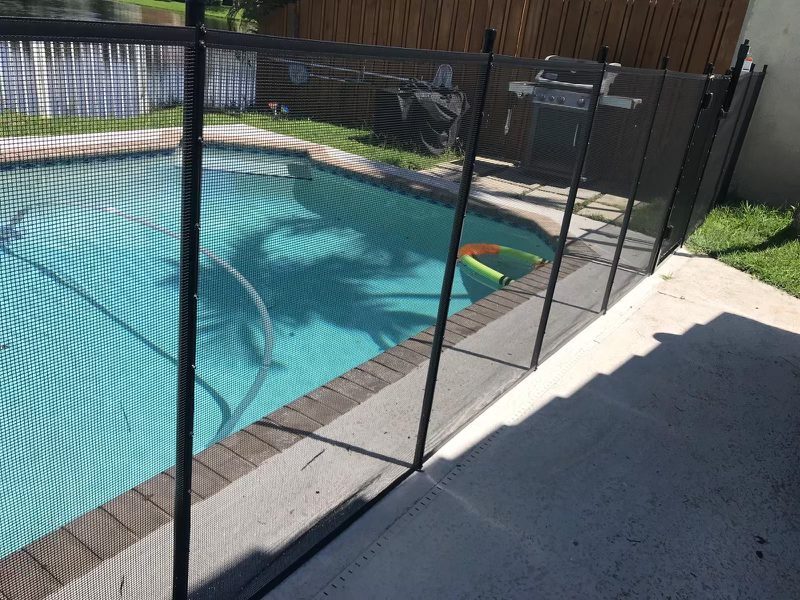
The American Red Cross recommends preparing for water emergencies, keeping suitable reaching or throwing equipment available, learning CPR, and checking the water first if a child is missing. Review its emergency preparation guidance.
Turn those recommendations into a short plan your household can actually use. Record the emergency address, caregiver responsibilities, equipment locations, and the contact for barrier repairs. Review it when guests arrive, when someone new starts caring for children, and after changes to the backyard or pool equipment.
Revisit Coral Springs pool statistics when an updated source becomes available, but do not wait for a new report to resolve an identified problem at home. A gate that needs service, an unclear supervision handoff, or an unanswered permit question already gives you a concrete next step. Assign responsibility for that step and follow through until it is resolved.
If you need help reviewing a proposed barrier layout, contact Florida Pool Fences with photographs and details about your pool. Ask about installation, ongoing care, and the local review process so the discussion addresses the way your household really uses its outdoor space.
The practical takeaway: Coral Springs pool statistics are most helpful when their sources and limits are clear. National and statewide findings provide context; careful supervision, appropriate barriers, maintained equipment, swimming skills, and emergency preparation guide everyday decisions. Start with your property’s access routes and the needs of everyone who uses or visits the pool.