
Pembroke Pines pool fence reinstallation belongs near the beginning of a pool patio remodel. Once the pavers are lifted, an old sleeve is covered, or the deck height changes, putting the fence back may involve more than returning each section to its former position. The useful conversation happens while the patio contractor and fence installer can still plan the work together.
The homeowner’s first question is usually sensible: can we keep the fence we already own? Sometimes that is possible. The answer depends on the condition of the components, the finished surface, the proposed route, and the instructions for the particular system. A quote based on “remove and replace” should explain what those words include.
These seven fence reinstallation checks follow the project from the first discussion through the final walkthrough. They also help separate decisions you can make about the backyard from details that your installer or the City needs to evaluate.
1. Plan pool access before the pool patio remodel
Before any section comes out, walk every route from the house and yard toward the water. Include the sliding doors, side gate, screen doors, and any path a visitor or delivery worker might use. Ask the contractors how those routes will be controlled during the work and when the crew is gone.
Give the temporary arrangement the same attention as the new paving. A project can pause between demolition and installation, so ask what happens if rain, a material delay, or a change in the schedule leaves the fence out longer than expected. Someone should be responsible for checking the site at the end of each workday and telling the homeowner when conditions change.
Put the responsibilities in the written scope: who removes the fence, who stores it, who maintains the agreed access controls, and who returns to reinstall it. Discuss the temporary barrier arrangement with the Building Department and the contractors before work starts. Do not assume construction mesh or a closed side gate is an approved substitute for the pool barrier.
Keep children away from the work area and maintain close adult supervision around water throughout the project. The CPSC Pool Safely barrier checklist explains why barriers work as one layer of protection alongside supervision.
2. Record the fence route and the finished deck changes
Take photographs before anything is disturbed. A wide view shows how the fence divides the patio; closer views record each gate, endpoint, corner, raised area, and pole location. Save a simple sketch with the photos so the original arrangement is understandable later.
Then ask the patio contractor to describe the finished surface. Will the height change? Are the same areas being repaved, or is the patio being extended? Will a step, planter edge, drain, or seating area move? Those answers help the fence installer evaluate the proposed route.
Consider a straightforward example: a homeowner wants to move the gate a short distance to improve the path from the house. That one choice can affect the adjoining sections and where the poles need support. It should be discussed before the patio crew finishes the area, even when most of the fence will stay where it was.
An old sleeve is useful evidence of the previous layout. Its presence alone does not settle whether it can be reused. Ask the fence installer to assess the sleeves, surrounding material, and manufacturer’s installation requirements. Avoid approving new holes from an old photograph or a generic spacing diagram.
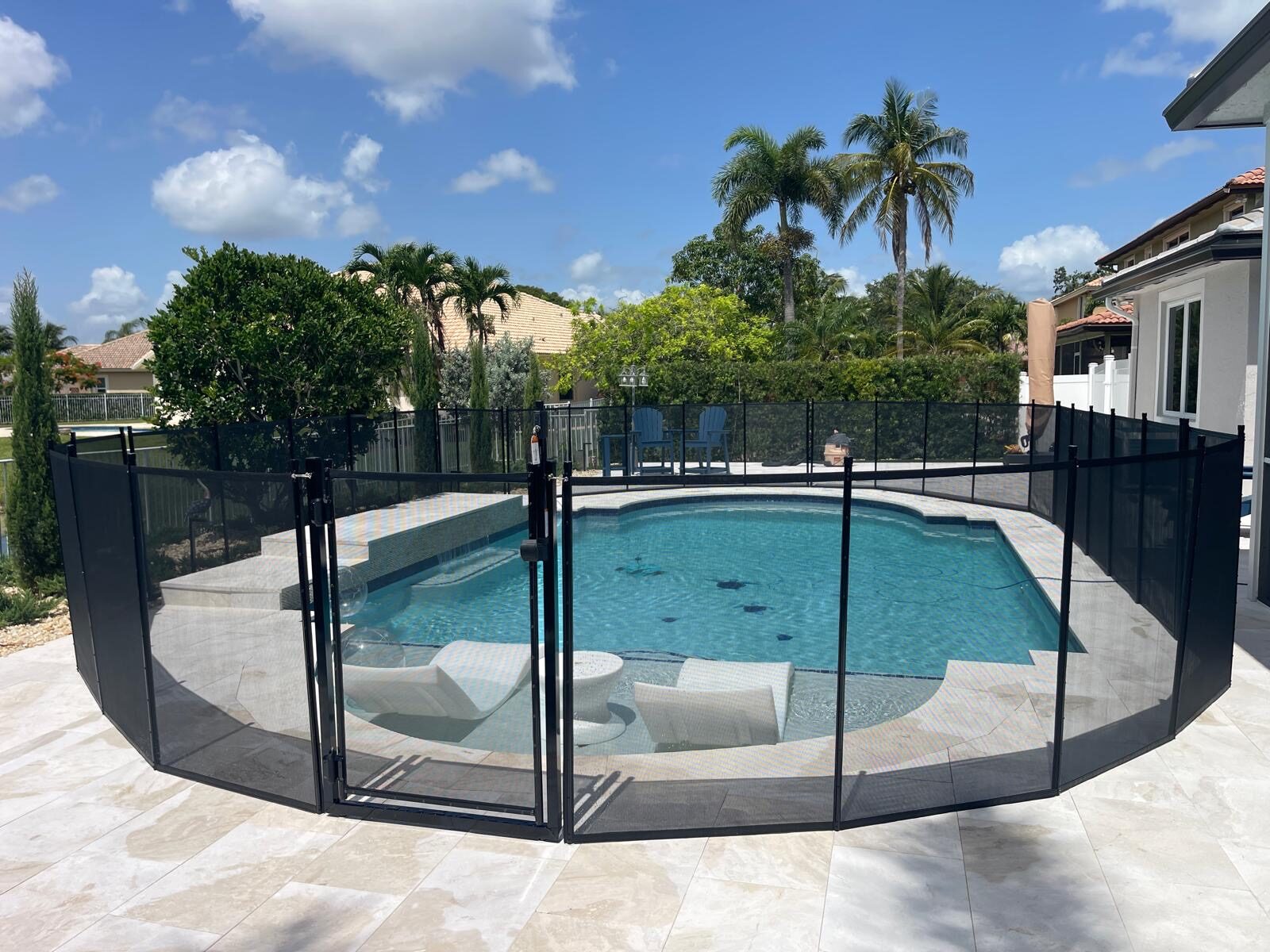
3. Confirm the pool fence permit scope in Pembroke Pines
Pembroke Pines publishes separate fence permit and driveway walkway and patio permit checklists. Both list a property survey showing location and setbacks and an HOA Awareness Affidavit. The posted checklists say that affidavit is required even if the property is outside an association.
Use those documents to frame a specific question for the City. Describe the patio work and explain whether the fence route, gate, surface height, or anchoring will change. Ask which application, revision, or inspection applies to that combination of work.
A patio approval should not be assumed to cover every barrier change. Equally, the checklists do not establish that every removal and reinstallation has the same permit requirements. The Building Department needs the actual scope to answer that question.
Keep the answer with the project records, along with any association requirements that apply to your property. If the scope changes after the first conversation, return to the question before the changed work proceeds. It is easier for everyone to work from one agreed description than to reconcile different plans at the end.
4. Decide what to reuse in the removable pool fence
For fence reinstallation, ask for a condition review before accepting an estimate that assumes all the old material will go back. The installer should evaluate the mesh, poles, connections, sleeves, and gate assembly, then compare the usable components with the new layout.
Request a clear distinction between materials expected to be reused and items included for replacement. If the installer cannot inspect a component until the patio work exposes it, ask how that uncertainty will be handled. The estimate can identify the unresolved item and the point at which you will receive an answer.
Storage matters too. Label sections in a way that makes their original positions easy to identify, and keep the components together in a protected location agreed with the installer. Avoid leaving the fence mixed with demolition debris or stacked where other trades will move materials across it.
For a removable pool fence, “removable” describes a feature of the system. It does not tell you that every connection may be released, every component is interchangeable, or any new layout will work. Use the instructions for the actual product and have the installer explain which parts are suitable for reuse.
This is also the time to compare reinstallation with replacement if damage or a substantially different route makes reuse impractical. Ask for the reasons behind either recommendation so you can compare the scope, rather than just the final price.
5. Check the pool fence gate against the new patio
The gate needs room to operate after the paving and furnishings are in place. Walk the route people will use from the house, and picture where the table, chairs, grill, toys, and planters will return. A gate that seems conveniently placed on an empty patio can become awkward once daily life resumes.
Ask the installer to demonstrate the finished gate and explain what correct operation looks like. Watch it close and latch, then operate it yourself. The CPSC recommends self-closing self-latching gates that open away from the pool; the installer should verify the product and layout against the requirements that apply to your project.
If the gate drags, meets an obstruction, or fails to latch, have the problem assessed before relying on it. Do not prop it open while waiting for an adjustment. Discuss how access to the pool will remain controlled until the issue is resolved.
Keep climbing aids away from the barrier when arranging the finished patio. A storage box or chair placed beside the mesh changes the surroundings even though the fence itself has not moved.
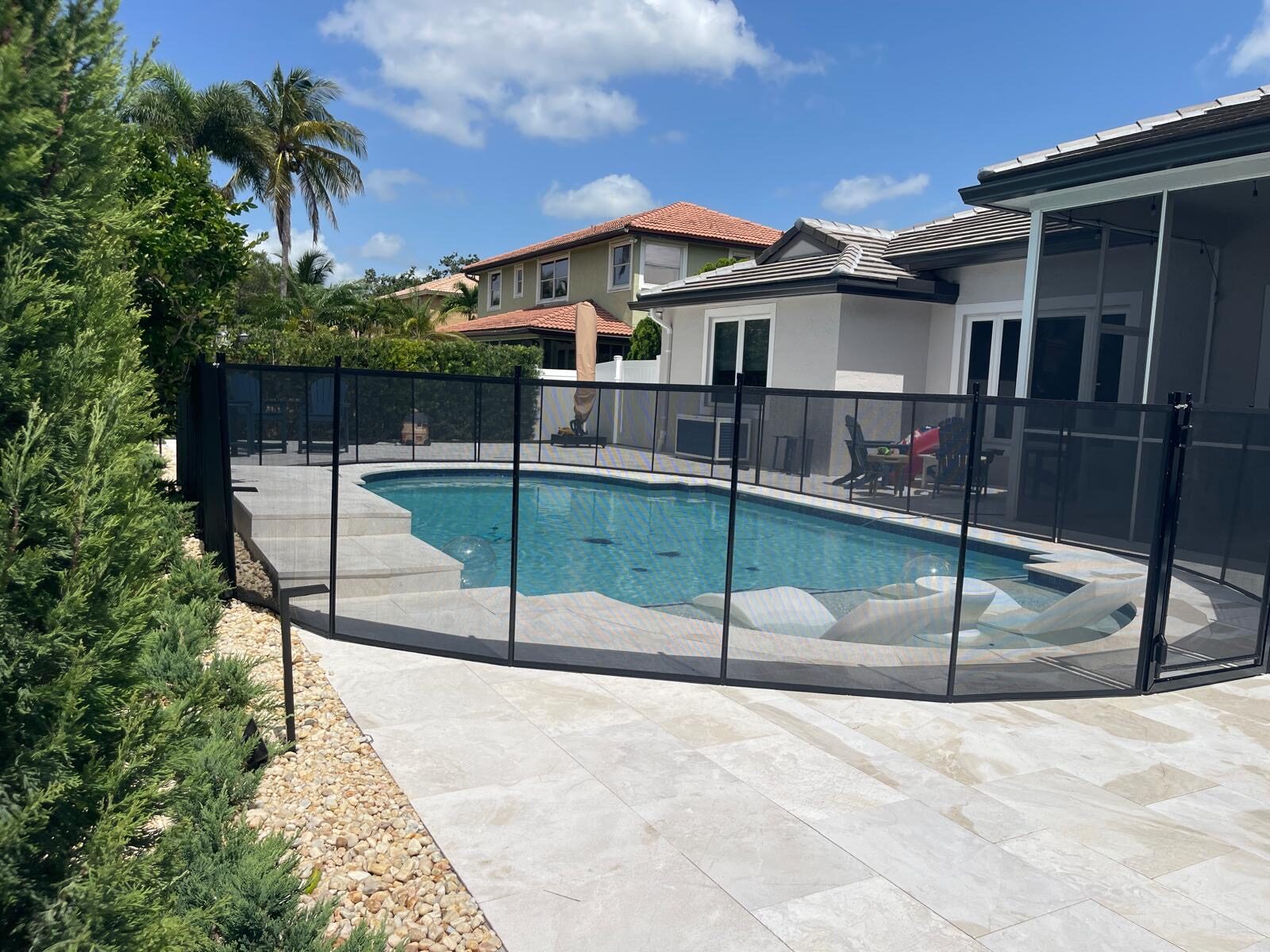
6. Walk the complete Pembroke Pines pool fence reinstallation
Schedule the fence reinstallation walkthrough when the surface work and fence work are ready to review together. Start at one end of the barrier and follow it all the way around. Pay attention to corners, endpoints, steps, and transitions between old and new surfaces.
Ask the installer to check the anchoring, connections, openings, and gate against the applicable requirements and product instructions. Point out anything that differs from the agreed layout, and ask for an explanation before it becomes the version everyone assumes is final.
Keep cosmetic questions and operating problems clear in your notes. A mark on a component and a gate that does not latch need different responses. Record the issue, who will address it, and how you will know the correction is finished. Photographs can help explain a concern, but they cannot establish every dimension or demonstrate gate function.
Where municipal inspections are required, keep the inspection results and confirm that any corrections are resolved. The homeowner walkthrough gives you a chance to understand the installation; it does not replace a required inspection.
7. Keep instructions that remain useful after the crews leave
Save the final scope, installation photographs, product information, service contact, and any permit or inspection records in one place. Add the manufacturer’s care and operating instructions. If sections are intended for homeowner removal, ask for a demonstration of the permitted procedure and the checks needed after reinstallation.
Have the adults who regularly use the backyard learn the gate while the installer is present. That is a better opportunity to clear up an awkward latch or an unfamiliar connection than a rushed explanation during a family gathering.
Ask what to check routinely and after landscaping, repairs, or other work near the pool. If the fence shifts, a section is damaged, or the gate operates differently, control pool access and contact the installer. Follow the product instructions for cleaning and adjustment rather than improvising a repair.
Use one written scope for fence reinstallation
Before accepting the work, ask for a short scope that both contractors can use. For fence reinstallation, it should identify the existing sections to remove, where they will be stored, the proposed gate position, and who evaluates the finished deck before drilling. Mark unresolved items as questions, rather than allowing a blank space to become an assumption.
A useful scope separates three decisions: what is known now, what can only be checked after removal, and what requires a response from the City or manufacturer. For example, the number of stored sections can be recorded immediately, while the condition of a concealed sleeve may remain uncertain. Ask when you will receive that assessment and whether a changed scope needs your approval before work continues.
Keep a simple fence reinstallation change log with the date, the proposed change, and the person responsible for answering it. A moved gate, a different finished deck height, or an added planter should be visible to both trades. Send the same updated sketch to everyone involved so an older photograph is not mistaken for the final plan.
At the end, compare the written scope with the installed route. Keep the final version with your fence reinstallation records, product instructions, and inspection documents. This record is especially useful when a different crew returns later for a repair or adjustment.
Questions homeowners ask before reinstallation
Can the existing holes be used after replacing the pavers?
That needs an on-site assessment. The new surface, sleeve condition, fence route, and product requirements all matter. Tell the patio contractor that the fence installer needs to review this before holes are filled, reused, or redrilled.
Who should drill the new holes?
Resolve that responsibility between the contractors before work begins. The person carrying out the work needs the final layout and installation requirements for the actual fence system. A general patio plan is not enough to establish the drilling pattern.
When should the installer return?
Have the patio contractor and fence installer agree on the sequence, including when the finished surface is suitable for the planned installation method. There is no single waiting period that can responsibly be applied to every paving or resurfacing project.
What should I send when asking about the project?
Start with wide photographs, close views of the gate and sleeves, and a description of what the patio contractor intends to change. Mention any damaged sections and whether you want to move the gate. Those details make the first conversation more useful.
Plan the fence alongside the patio
Our Pembroke Pines pool fence installation page is a starting point for local installation and layout questions. If you are planning Pembroke Pines pool fence reinstallation, contact Florida Pool Fences or call (954) 605-5454 with the proposed patio work and the condition of the existing barrier.
The most useful first step is a shared look at the yard before demolition. It gives the homeowner and both contractors a chance to settle the route, access plan, and responsibilities while changes are still manageable.
Compare fence reinstallation estimates by responsibility
Two estimates can use the same phrase and still describe different work. Before comparing totals, put the responsibilities side by side. Does the fence reinstallation scope include removal, protected storage, an assessment of the existing components, new sleeves where needed, and a return visit after the patio is ready? Ask the contractor to identify exclusions and unresolved items in plain language. Do not assume an item is included because it appears in a photograph or was mentioned during an early conversation.
Ask what happens if the layout changes
A patio project may uncover a problem or lead the homeowner to reconsider a gate location. Ask how a proposed change will be documented, who evaluates it, and when you will be told about any effect on the work. The important point is a clear decision process. A short written description and an updated sketch are more useful than separate text messages that describe different versions of the yard. Keep the patio contractor and fence installer working from the same revision.
Keep scheduling assumptions visible
For fence reinstallation, the return visit depends on more than the paving crew leaving the property. The installer needs to know that the relevant surface and layout are ready for the intended work. Ask each contractor what they need from the other before scheduling the next stage. If either party identifies an unresolved condition, put it on the shared list and agree on who will report back. Avoid treating an estimated completion day as confirmation that every preparation step is finished.
Decide how stored components will be identified
Ask the installer how sections, hardware, and other reusable parts should be labeled and stored. Keep any labels understandable to the person returning for fence reinstallation, especially if the removal and return visits may involve different crew members. Record visible damage when the components are put away so that condition questions can be discussed clearly. Do not remove labels or mix stored fence parts with unrelated materials while the patio project is underway.
Close out the fence reinstallation record
Before considering the job complete, ask for a final explanation of what was reused, what was replaced, and whether any agreed item remains unresolved. Keep that explanation with the finished-layout photographs and applicable project records. If a service visit is needed, identify the concern specifically and ask what access arrangement should be maintained until it is corrected. This is a practical way to keep responsibilities clear; it does not create a warranty or establish that an installation meets every applicable requirement.
These questions also make the first estimate conversation more efficient. A homeowner who can explain the proposed surface changes, the existing fence condition, and the desired gate route gives the contractors a better starting point than a request to “put it back the same.”